A small brown spot on a ceiling can look harmless for weeks, right up until a heavy Memphis rain turns it into a dripping problem. The top signs of hidden leaks often appear far from the actual opening in your roof, siding, windows, or plumbing. Catching them early can mean the difference between a focused repair and damaged insulation, mold growth, rotted framing, or a larger insurance claim.
Memphis-area homes face intense summer storms, wind-driven rain, humid conditions, and occasional hail. Those conditions put every part of the exterior system to work. Knowing what to watch for helps you protect your home before water has time to spread.
Top Signs of Hidden Leaks to Watch For
Hidden leaks rarely announce themselves with a steady drip. More often, they leave subtle changes in materials, odors, and indoor comfort. If you notice one sign, pay attention. If you notice several at once, schedule a professional inspection promptly.
Ceiling or wall stains that keep changing
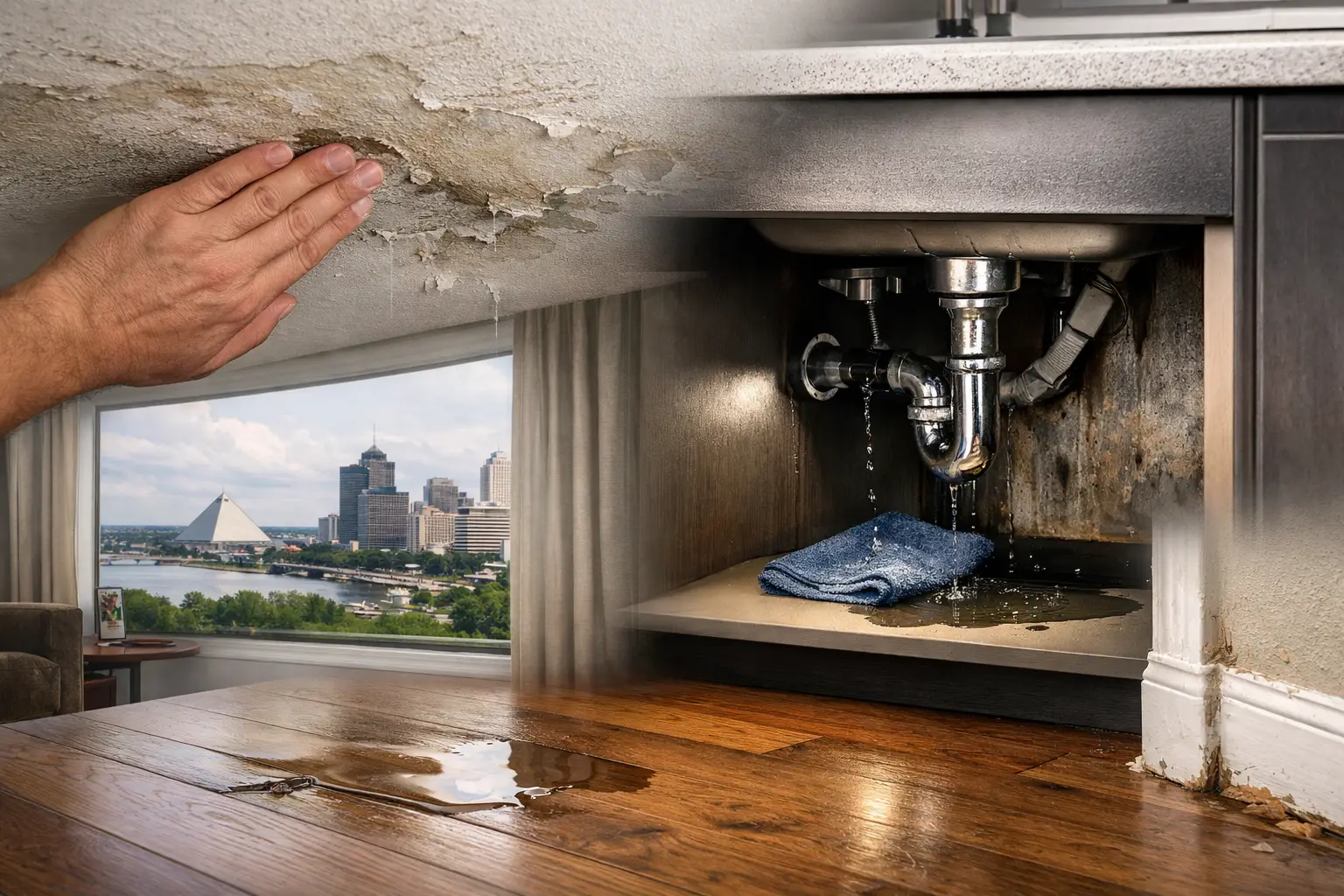
Yellow, brown, or copper-colored stains on ceilings and walls are among the clearest warnings of water intrusion. A stain may appear around a light fixture, near an exterior wall, in a closet, or along a ceiling seam. The location is useful, but it does not always identify the source. Water can travel along roof decking, rafters, framing, or wiring before it becomes visible inside.
Watch for stains that grow after rainfall, feel soft when lightly pressed, or develop a darker ring around the edges. Fresh paint may cover the discoloration temporarily, but it will not stop the moisture behind it. Before repainting, identify and correct the cause.
Peeling paint, bubbling drywall, or swollen trim
Paint that bubbles, flakes, or separates from a wall can signal that moisture is trapped behind the surface. Drywall may look swollen, feel soft, or show a raised seam. Baseboards, door trim, and crown molding can warp or pull away from the wall when water reaches them repeatedly.
These issues are not always caused by a roof leak. They can come from a plumbing line, window flashing failure, condensation, or water entering through damaged siding. That is why an inspection should consider the entire building envelope instead of focusing only on the visible damage.
A musty smell that does not go away
A persistent damp or musty odor deserves attention, particularly in an attic, upstairs room, bathroom, closet, or near an exterior wall. Humidity is common in the Mid-South, but your home should not have a lasting smell of damp materials after normal cleaning and ventilation.
That odor can indicate wet insulation, mold growth, or hidden moisture in framing and drywall. You may not see mold at first. Addressing the source of the water is the first priority, then affected materials can be evaluated for safe drying, cleaning, or replacement.
Damp insulation or attic moisture
Your attic is one of the best places to find a roof leak before it reaches finished living areas. During a careful inspection, look for darkened roof decking, wet or compressed insulation, rust on nails, damp rafters, and water marks near vents, chimneys, skylights, or valleys.
Do not assume condensation and a roof leak are the same problem. Inadequate attic ventilation can create moisture on cold surfaces, while a roof opening allows rainwater inside. Both can damage wood and insulation, but they require different repairs. A trained roofing professional can help distinguish between them.
A water bill that rises without an explanation
Not every hidden leak begins at the roofline. A sudden increase in your water bill may point to a plumbing leak under a slab, behind a wall, at a fixture connection, or along an irrigation line. Check whether your water meter continues moving when all faucets, appliances, and irrigation systems are off.
Water bills can also rise because of seasonal lawn watering, a running toilet, or changes in household use. Still, an unexplained increase is worth investigating quickly. Plumbing leaks can undermine flooring, encourage mold, and waste a surprising amount of water over time.
Warped floors or unexplained soft spots
Wood flooring that cups, laminate that lifts at the seams, and carpet that feels damp can all be signs of water below or behind the finished surface. In some cases, homeowners notice a soft spot in a floor near an exterior door, bathroom, laundry room, or kitchen before they see any other evidence.
Floor damage can result from a plumbing issue, appliance leak, crawl space moisture, foundation drainage problem, or water entering through a poorly sealed door or window. Because flooring repairs can be costly, it is wise to find the moisture source before replacing damaged materials.
Drips, rust, or staining around skylights and windows
Windows and skylights are designed to shed water, not simply block it. When flashing, sealants, gaskets, or surrounding roofing materials fail, wind-driven rain can work its way inside. Look for staining at the top corners of a window, peeling paint around the frame, condensation between glass panes, or a soft drywall return.
With skylights, a leak may originate at the skylight itself, its flashing system, or the surrounding roof. Caulking over the visible area can sometimes create a short-term patch, but it is not a dependable substitute for correcting a flashing or installation issue.
Granules, shingle damage, and overflowing gutters
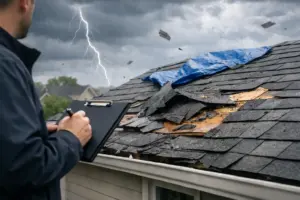
Exterior clues matter because they can reveal why water is entering the home. Missing or lifted shingles, cracked pipe boots, exposed nail heads, damaged flashing, and loose ridge caps can all create pathways for rain. After a storm, check the ground and gutter downspouts for unusual amounts of asphalt granules, which can signal aging shingles.
Gutters also play a major role. When gutters are clogged, undersized, improperly pitched, or pulling away from the fascia, water can overflow onto roof edges, siding, windows, and the foundation. The leak may show up indoors, but the repair could involve restoring proper drainage outside.
Why Leaks Can Be Difficult to Pinpoint
The place where water appears is often not where it entered. Wind can push rain uphill beneath compromised shingles. Water can follow a roof deck until it reaches a joint or opening. A window stain may originate from siding above it, and a ceiling stain near a bathroom may be caused by a roof penetration rather than plumbing.
This is why a quick visual check from the ground has limits. A thorough assessment considers roof condition, flashing, gutters, siding transitions, window and skylight details, attic conditions, ventilation, and the pattern of interior damage. The goal is not simply to stop a drip today. It is to correct the point of entry and protect the materials around it.
What to Do When You Suspect a Hidden Leak
Start by documenting what you see. Take clear photos of stains, wet areas, damaged shingles visible from the ground, or overflowing gutters. Make a note of when the issue appears, especially whether it follows heavy rain, wind, appliance use, or an increase in water consumption.
If water is actively entering your home, move furniture and valuables away from the affected area. Place a container under a drip if it is safe to do so. If a ceiling is bulging with trapped water, avoid standing beneath it and contact a professional right away. Water near electrical fixtures, outlets, or a breaker panel requires extra caution.
Avoid climbing onto a wet or steep roof to investigate. Storm damage and roof leaks can be more extensive than they appear, and a close inspection is safer with the right training and equipment. If exterior damage may be related to a recent storm, keep photos and notes that may help support an insurance claim.
When a Professional Exterior Inspection Makes Sense
A professional inspection is a practical next step when you see staining, smell persistent moisture, find attic dampness, notice shingle damage, or experience leaks after rain. It is also smart after a significant wind or hail event, even if there is no immediate interior damage.
For homeowners who want one team to evaluate how roofing, gutters, siding, skylights, and windows work together, Precision Roofing & Exteriors can provide a clear assessment and an itemized recommendation. The right repair depends on the source, the age and condition of surrounding materials, and whether the issue is isolated or part of a broader exterior problem.
Water does not wait for a convenient time to spread. If something in your home looks, smells, or feels different after a storm, trust that signal and have it checked before a small hidden leak becomes a major repair.