
The morning after a strong storm, most homeowners are not thinking about shingles, flashing, or moisture readings. They are looking at tree limbs in the yard, water stains on the ceiling, and the uneasy feeling that damage may be worse than it looks. A solid storm damage home restoration checklist helps you slow down, protect your property, and make smart decisions before small issues turn into expensive repairs.
In the Memphis area, storm damage is rarely limited to one surface. Wind can lift shingles, hail can bruise roofing materials, clogged gutters can force water behind fascia, and siding or windows may take hits at the same time. That is why the best response is not just quick. It is organized.
Start with safety before anything else
The first job is making sure your home is safe to enter and safe to stay in. If you see downed power lines, smell gas, notice sagging ceilings, or find standing water near electrical systems, stop there and call the right emergency professionals first. Exterior damage can wait a little longer. Safety cannot.
Even when damage seems minor, use caution around wet insulation, broken glass, exposed nails, and unstable tree limbs. It is also wise to keep children and pets away from affected areas until you know what has shifted, cracked, or loosened during the storm.
If water is actively entering the home, move furniture, rugs, electronics, and valuables away from the leak path. A bucket under a drip helps, but the more important step is limiting interior damage while you arrange an inspection or emergency service.
Your storm damage home restoration checklist for the first 24 hours
In the first day, your goal is not to diagnose every issue on your own. Your goal is to stabilize the situation and document what happened.
Take clear photos and video of all visible damage. Get wide shots of the house, then close-ups of specific areas like missing shingles, dented gutters, cracked siding, window damage, wet drywall, and damaged personal property. If a fence, detached garage, or skylight was affected, capture that too. Good documentation makes insurance conversations much easier later.
Make brief notes while details are fresh. Record the date of the storm, approximate time, what you observed, and when the damage was first noticed. If neighbors had similar issues, that can be useful context, especially after hail or high-wind events.
Then take reasonable temporary steps to prevent more damage. That might mean placing a tarp over an exposed roof section, covering a broken window opening, or removing debris that is blocking water flow away from the home. Temporary protection matters because insurance carriers often expect homeowners to prevent avoidable secondary damage.
At the same time, avoid permanent repairs until the damage is documented and inspected. Replacing materials too early can complicate a claim or make it harder to show the full scope of the problem.
Check the roof, but do it from the ground
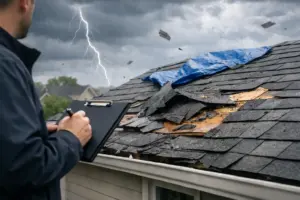
Roof damage is often the biggest concern, but it is also where homeowners take the most unnecessary risks. After a storm, a roof can be slick, soft, or structurally compromised. The safest first inspection is from the ground with binoculars or by viewing upper slopes from a secure position.
Look for obvious warning signs such as missing shingles, lifted ridge caps, exposed underlayment, bent flashing, dents on metal vents, fallen branches, and granules collecting in downspout outlets. Inside the home, check the attic if you can do so safely. Damp insulation, water marks on decking, or a musty smell may point to hidden roof leaks.
Not all damage is dramatic. Hail bruising, loosened seals, and flashing displacement may not be visible from the yard, but they can still shorten roof life or allow slow water intrusion. That is one reason a professional inspection matters. What seems cosmetic can become a leak six months later.
Don’t overlook gutters, siding, windows, and trim
A full restoration plan should cover the entire exterior, not just the roof. Storms often create chain reactions. A damaged gutter system can dump water along the foundation. Cracked siding can expose sheathing and insulation. Broken window seals can let moisture in long after the storm has passed.
Walk the perimeter and look for gutters pulling away from the fascia, downspouts knocked loose, dents in aluminum components, siding panels that are cracked or shifted, and trim pieces that have separated. Check around windows and doors for water intrusion, broken caulk lines, or visible frame damage.
This is especially important for homeowners who want one repair to truly solve the problem. Replacing shingles without addressing drainage or siding damage can leave the home vulnerable during the next heavy rain.
Contact your insurance company, but keep the process organized
If the damage looks claim-worthy, notify your insurance carrier early. Be factual and concise. Share the storm date, basic description of the damage, and whether emergency mitigation is needed.
What helps most is staying organized. Create one folder for photos, inspection notes, receipts, claim correspondence, and contractor estimates. Keep a log of who you spoke with, when, and what was discussed. Claims often feel stressful not because they are impossible, but because details scatter fast.
It also helps to understand that insurance and repair scopes do not always line up perfectly at first. Adjusters work within policy terms and visible evidence. Contractors look at repair requirements, code compliance, and full system performance. Sometimes those views match right away. Sometimes more documentation is needed.
That is where experienced insurance claim assistance can reduce friction. A contractor who knows how to document storm-related exterior damage can help homeowners present a clearer picture of what the home actually needs.
Schedule a professional inspection before making big decisions
A trustworthy inspection gives you the foundation for every next step. It should identify storm-related damage, separate urgent repairs from less immediate concerns, and explain whether spot repair or full replacement makes more sense.
That last point matters. Some homes only need targeted repairs. Others have damage spread across enough areas that patching becomes a short-term fix with long-term risk. Age, material condition, code requirements, and product availability all affect the right path.
For example, repairing one roof slope may be reasonable if the rest of the system is in strong condition and matching materials are available. If the roof is already near the end of its service life, however, repeated repairs may not be the best investment. The same logic applies to siding and gutters. A lower upfront cost is not always the lower total cost.
In the Memphis market, many homeowners prefer a contractor who can inspect the full exterior at once. That makes it easier to build one coordinated plan instead of juggling separate roof, gutter, siding, and window companies.
Prioritize drying, sealing, and structural protection
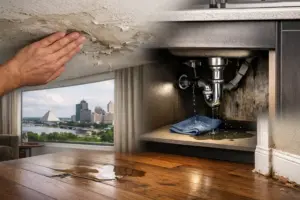
If the storm caused water intrusion, moisture control moves to the top of the list. Wet drywall, insulation, framing, and flooring can lead to mold growth, wood deterioration, and indoor air quality concerns if they are not addressed promptly.
This stage is less visible than replacing shingles or gutters, but it is just as important. Drying affected areas, removing materials that cannot be saved, and sealing openings against more weather exposure help protect the home while the full repair scope is finalized.
Homeowners sometimes wait because stains seem to dry on their own. That can be misleading. The visible water may disappear while trapped moisture remains in insulation, wall cavities, or roof decking. If a leak reached the interior, treat it as a restoration issue, not just a cosmetic one.
Choose repairs based on durability, not just speed
After a storm, everyone wants normal back as fast as possible. That is understandable. But the best restoration work balances speed with quality.
Ask practical questions. Are the crews manufacturer-certified? Will the work meet code? Is there a written workmanship warranty? Will cleanup be handled carefully? Are materials selected for local weather conditions, not just lowest price? Those details shape how your home performs in the next storm, not just how it looks next week.
A dependable contractor should also give you a clear, itemized estimate and explain what is included. If emergency tarping, underlayment replacement, flashing updates, gutter resets, or siding sections are needed, those items should not feel vague. Homeowners deserve clarity before work begins.
That is one reason many local families choose a full-service exterior contractor like Precision Roofing & Exteriors. When the roof, drainage, siding, and surrounding components are considered together, the repair plan is usually cleaner, faster, and less stressful.
Final checks before the job is really done
Restoration is not complete when the crew leaves. It is complete when the home is watertight, the workmanship has been reviewed, and the property is left clean and protected.
Do a final walkthrough and ask questions. Confirm that problem areas were addressed, vents and flashing were installed correctly, gutters are draining properly, and cleanup included nails, debris, and material scraps. Save copies of warranties, invoices, claim paperwork, and photo records for future reference.
A storm can leave you feeling rushed, but the strongest response is steady and informed. When you follow a clear checklist, ask the right questions, and work with professionals who treat your home like a long-term investment, the path forward gets a lot easier.