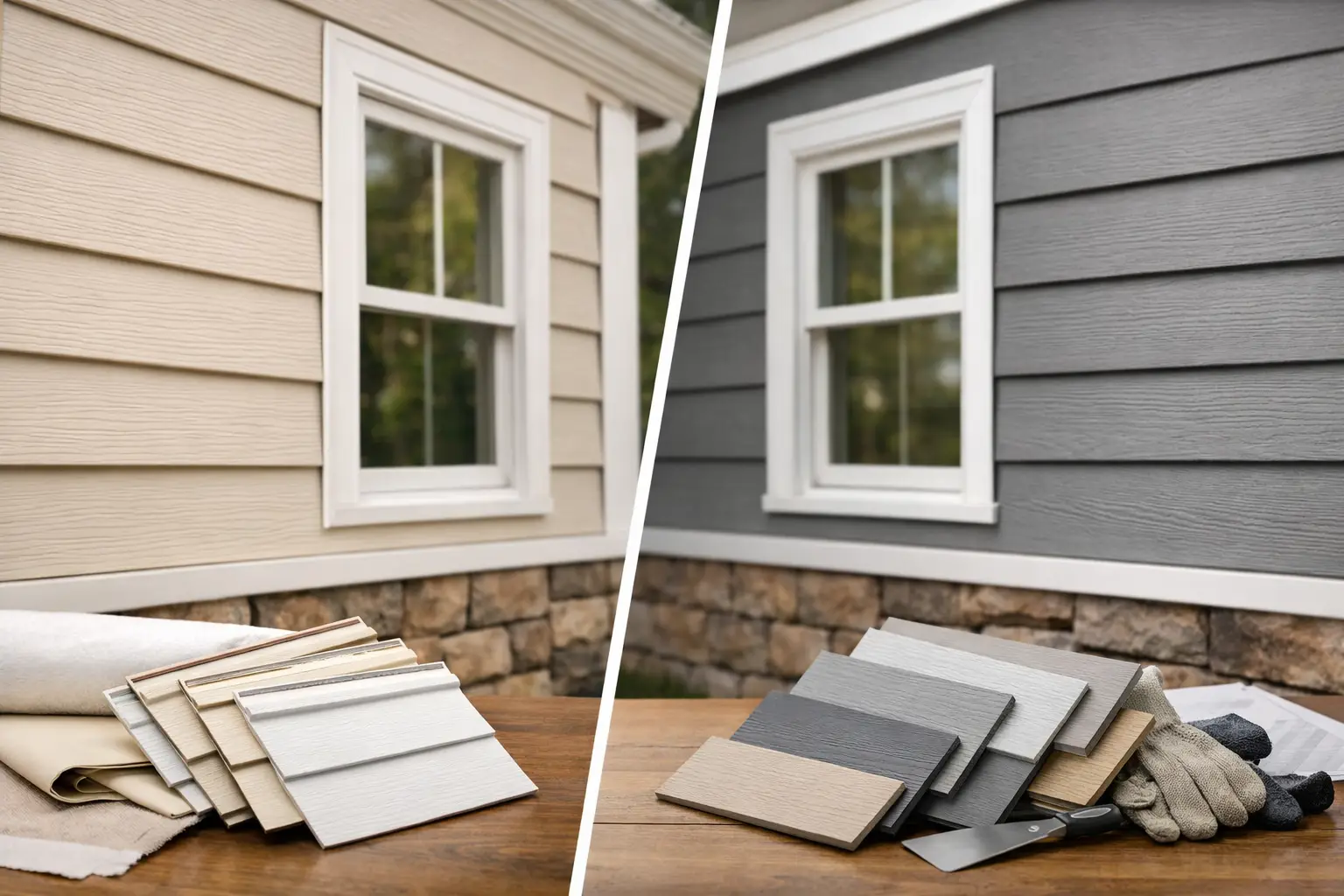
A siding quote can look straightforward until you get to the material options. Then the real question shows up: in a vinyl siding vs fiber cement decision, what actually makes sense for your home, your budget, and the way Memphis weather treats exterior surfaces?
That answer depends on more than upfront price. Siding is part of your home’s protective shell. It affects curb appeal, maintenance, storm performance, and how soon you may need repairs or replacement again. If you are weighing these two options, the goal is not to find a universal winner. It is to choose the material that fits your house, your priorities, and the level of upkeep you are comfortable with.
Vinyl siding vs fiber cement at a glance
Vinyl siding is usually the more budget-friendly option upfront. It is lightweight, widely available, and fast to install. For homeowners who want a clean exterior update without pushing the project cost too high, vinyl often earns a serious look.
Fiber cement costs more at the start, but many homeowners choose it for its heavier feel, strong durability, and more premium appearance. It is made to stand up well to moisture, heat, pests, and impact when installed correctly. It also tends to offer a more solid, painted-wood look that appeals to homeowners focused on resale value or a higher-end finish.
If you want the shortest version, vinyl usually wins on price and lower maintenance demands, while fiber cement often wins on long-term toughness and appearance. But those broad advantages only tell part of the story.
Cost matters, but so does what you get for it
For many families, budget is the first filter. Vinyl siding generally has a lower material and labor cost than fiber cement. Because it is lighter and easier to handle, installation is usually faster and less labor-intensive. That can make a big difference on larger homes or when siding is part of a broader exterior project.
Fiber cement is heavier, more specialized to install, and often requires more cutting, handling, and finishing on site. That raises labor costs. It also tends to involve painting or factory finishes that affect the final price.
Still, low upfront cost is not the same as low lifetime cost. If a homeowner plans to stay in the home for many years, the question shifts from What is cheapest now to What holds up best over time? In some cases, paying more for fiber cement makes financial sense. In others, vinyl delivers the right balance of value and performance without overbuilding for the neighborhood.
How each material handles Memphis weather
In the Mid-South, siding has to deal with heat, humidity, heavy rain, strong sun, and the occasional severe storm. That combination puts stress on almost every exterior product.
Vinyl siding handles moisture well because it does not absorb water the way wood can. It also will not need repainting. But intense heat can cause warping in some situations, especially with lower-quality products or poor installation. Strong impacts can also crack panels, which matters after hail or windblown debris.
Fiber cement performs very well in heat and moisture when it is properly installed and maintained. It is not prone to warping the same way vinyl can be, and it generally offers better resistance to impact and fire. That said, it is not maintenance-free. If the caulking, paint, or flashing details are neglected, moisture can still create problems over time.
For local homeowners, installation quality is just as important as the material itself. Even a premium product can fail early if seams, trim, weather barriers, or flashing are handled poorly.
Appearance and curb appeal
This is where personal preference starts to carry real weight. Vinyl has improved a lot over the years. Better product lines offer richer color options, stronger profiles, and cleaner finishes than the older styles many people still picture. On the right home, vinyl can look sharp and well-kept.
Fiber cement usually has the edge if you want a more substantial, upscale look. It can mimic painted wood siding more convincingly, and many homeowners like the crisp lines and deeper visual texture. If your home has a traditional design or you want a finish that feels more custom, fiber cement often stands out.
Neighborhood context matters here too. On some homes, vinyl looks perfectly appropriate and keeps the project cost in a comfortable range. On others, especially where homeowners are investing heavily in windows, roofing, trim, and exterior upgrades, fiber cement may better match the overall level of finish.
Maintenance is not the same as no attention required
Vinyl siding is often described as low-maintenance, and that is mostly true. It does not need painting, and routine cleaning is usually enough to keep it looking good. For busy homeowners who want an exterior that stays presentable without much effort, that is a major advantage.
But low-maintenance does not mean ignore it forever. Panels can loosen, crack, or shift, and dirt or mildew can build up in shaded areas. Repairs are usually manageable, but color matching can be tricky if the original siding has faded over time.
Fiber cement requires more ongoing attention. If it is prefinished, the factory coating can last a long time, but it will not last forever. If it is field-painted, repainting will eventually become part of ownership. Caulk joints and trim transitions also need periodic checks.
Some homeowners are perfectly comfortable with that because they value the look and durability. Others would rather avoid any future painting cycle. That preference should absolutely be part of the decision.
Durability and lifespan
When homeowners compare vinyl siding vs fiber cement, durability is usually one of the biggest reasons fiber cement enters the conversation.
Fiber cement is known for holding up well against rot, insects, heat, and everyday wear. It has a reputation for longevity, especially when installed by trained crews and maintained properly. For homeowners who want a product that feels solid and built for the long haul, fiber cement is appealing.
Vinyl can also last for many years, particularly when quality materials are used and the home is not exposed to repeated impact damage. But it is generally more vulnerable to cracking and distortion than fiber cement. That does not make it a poor choice. It just means expectations should be realistic.
If your priority is maximum toughness and a premium exterior system, fiber cement usually has the advantage. If your priority is practical performance at a lower cost, vinyl remains a strong contender.
Installation quality can make or break both options
This is the part homeowners do not always hear enough about. A good product installed poorly can create leaks, buckling, early wear, and expensive callbacks.
Vinyl siding needs room to expand and contract. If it is nailed too tightly or installed without the proper clearance, it can ripple or warp. Fiber cement has its own demands, including precise clearances, fastening methods, moisture management details, and proper treatment around trim and penetrations.
That is why contractor selection matters as much as material selection. Manufacturer guidelines, local code compliance, flashing details, and cleanup standards all affect the final result. A written workmanship warranty also adds peace of mind because it tells you the crew stands behind the installation, not just the product itself.
Which siding is right for your home?
If you want the most cost-effective path to a refreshed exterior, vinyl siding often makes sense. It is a practical fit for homeowners who want lower upfront cost, less maintenance, and a clean appearance without stretching the budget.
If you are planning a longer-term investment, want a more premium look, and do not mind some future upkeep, fiber cement may be the better choice. It is especially attractive for homeowners who want stronger durability and a finish that complements higher-end exterior improvements.
There are also cases where the right answer depends on the house itself. The home’s design, your neighborhood, existing trim details, exposure to sun and storms, and whether this is a forever home or a near-term resale all matter. A real inspection can help sort through those variables better than any online price range ever will.
For homeowners who want straight answers without pressure, that conversation should feel simple. At Precision Roofing & Exteriors, the best projects start with understanding what the home needs, what the homeowner wants, and what will hold up well in our local conditions.
The best siding choice is the one you still feel good about years from now – after the storm season, after the summer heat, and after the first time you pull into the driveway and know you made a smart decision for your home.