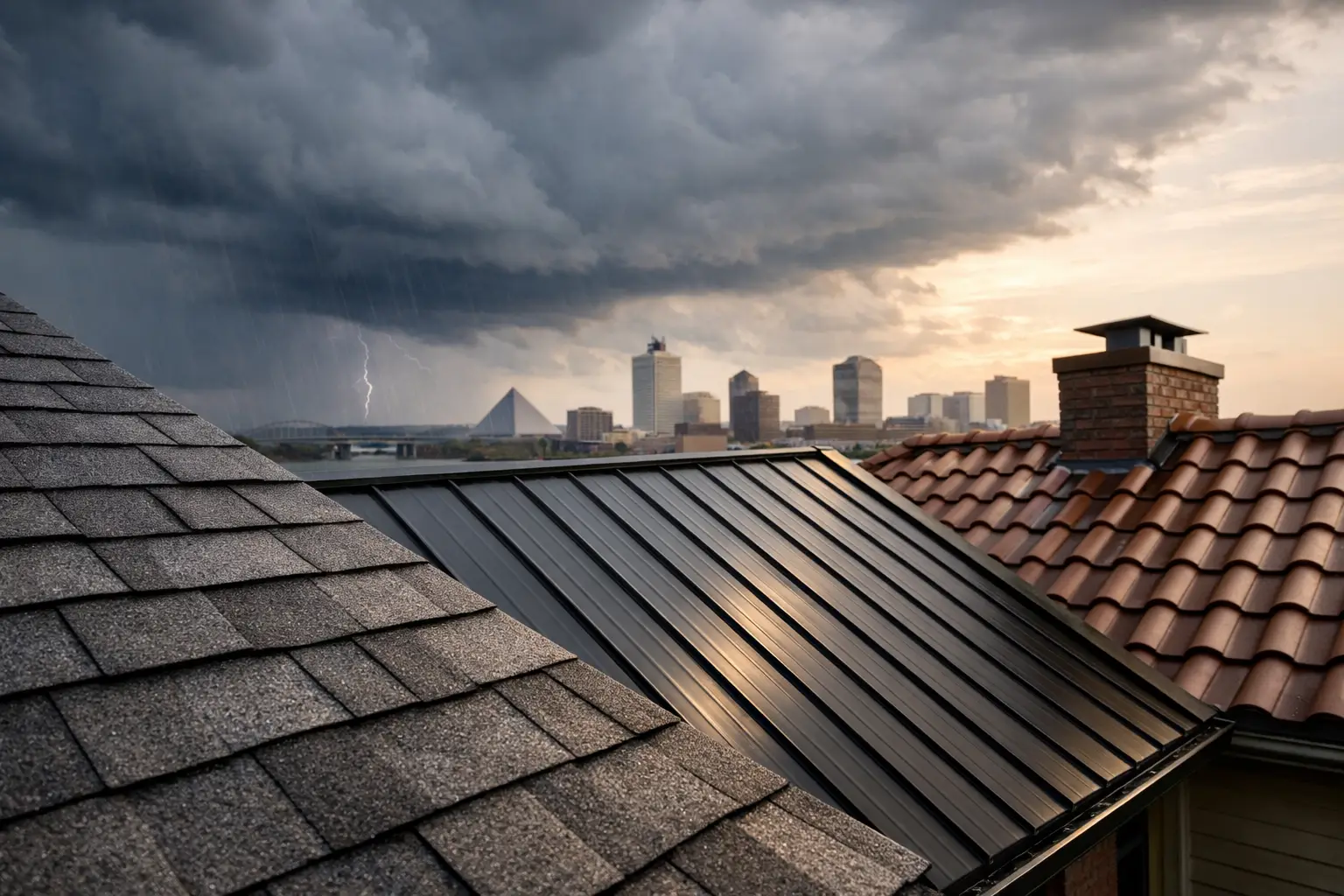
A Memphis storm can test a roof in several ways at once. Wind lifts at vulnerable edges, hail strikes exposed surfaces, heavy rain finds weak flashing, and summer heat works on materials long after the clouds clear. The best roofing materials for storms are not simply the toughest products on a showroom sample. They are the materials that fit your home, budget, roof design, and local weather – installed as a complete, code-compliant roofing system.
For homeowners in Memphis, Germantown, Olive Branch, Southaven, and nearby communities, the right choice often comes down to balancing wind resistance, hail performance, water protection, appearance, and long-term cost. A professional inspection can identify whether repair is still practical or whether an aging roof has reached the point where replacement offers better protection.
What Storm-Ready Roofing Needs to Handle
Storm resistance is not one rating or one feature. A roof may perform well in wind but still be vulnerable to repeated hail impacts. Another may resist hail effectively but require a larger upfront investment. Before comparing materials, consider the hazards a Memphis-area roof faces most often: driving rain, sudden wind gusts, hail, humidity, intense UV exposure, and rapid temperature changes.
Wind resistance matters because shingles and metal panels are most likely to fail at roof edges, ridges, valleys, and around penetrations when installation details are weak. Hail resistance matters because even small impacts can knock protective granules from asphalt shingles or create hard-to-see bruising that later develops into leaks. Rain protection depends on more than the visible roof covering. Underlayment, flashing, ventilation, gutters, and drainage all have a role.
That is why material selection should start with the entire roofing assembly, not just the color or profile of the roof surface.
Best Roofing Materials for Storms: The Strongest Options
Architectural asphalt shingles
Architectural shingles are the most common choice for storm-conscious homeowners because they offer a practical mix of durability, curb appeal, and value. They are thicker and more dimensional than traditional three-tab shingles, and many product lines are engineered for higher wind ratings when installed with the manufacturer-required nailing pattern and accessories.
For areas with frequent hail, look for impact-resistant architectural shingles with a Class 4 impact rating. This rating is commonly associated with products tested to withstand simulated hail impacts better than standard shingles. It does not mean the roof cannot be damaged by a severe storm, but it can reduce the likelihood of visible cracking and granule loss from moderate hail.
Architectural shingles are a smart fit for many Memphis homes, particularly when homeowners want a familiar look and manageable replacement cost. The trade-off is that performance varies widely by product quality and installation. A premium shingle installed with proper starter strips, ridge caps, ventilation, flashing, and fasteners will generally outperform a lower-grade option installed without those details.
Standing seam metal roofing
Standing seam metal roofing is one of the strongest long-term options for wind and rain. Its panels lock together with raised seams, and concealed fasteners reduce the number of exposed points where water can enter. Quality metal roofing systems can also provide excellent wind resistance when engineered and installed for the roof’s specific conditions.
Metal sheds rain quickly and will not lose granules after hail. However, large hail can still dent certain metal panels, especially lighter-gauge materials. Homeowners who prioritize hail appearance should discuss panel thickness, finish quality, and the realistic risk of cosmetic denting before making a decision.
The biggest consideration is cost. Standing seam metal typically requires a larger upfront investment than asphalt shingles, but it can offer a long service life, clean architectural lines, and dependable protection when installed correctly. It is especially appealing for homeowners planning to stay in their home for many years or those replacing a roof with recurring wind-related issues.
Metal shingles and stone-coated steel
Metal shingles and stone-coated steel offer a middle ground for homeowners who want the durability of metal without the appearance of standing seam panels. These systems can resemble traditional shingles, shake, or tile while providing strong wind and water performance.
Stone-coated steel has a textured surface that can make it more forgiving visually than smooth metal after minor impacts. Like any premium system, its performance depends on using the manufacturer-approved accessories and installation methods. This option is worth considering when curb appeal is a priority but a standard asphalt roof does not offer the level of durability you want.
Synthetic slate or composite roofing
Synthetic slate and composite shingles are designed to provide the upscale appearance of natural slate or cedar without the same weight and maintenance demands. Many premium composite products offer strong impact resistance and are engineered to handle wind, moisture, and UV exposure well.
For a homeowner who wants a distinctive roof with storm-focused performance, composite roofing can be an excellent investment. It is not the lowest-cost option, and product quality varies, so it is important to compare warranty coverage, impact ratings, and installation requirements rather than choosing by appearance alone.
Natural slate, clay tile, and concrete tile can be durable in the right setting, but they are not automatic storm-proof choices. Their weight may require structural consideration, and individual pieces can crack or shift during hail or wind events. In the Memphis area, these materials are usually selected for a specific architectural style rather than as the most practical all-around storm solution.
The Installation Details That Matter as Much as the Material
Even the best material can fail early if the roof system underneath it is incomplete. Storm damage often begins where components meet: at chimneys, skylights, vents, valleys, walls, and roof edges. These locations require carefully installed flashing and water-management materials, not just a surface covering.
A storm-ready replacement should include quality underlayment suited to the roof design, properly placed flashing, starter materials at eaves and rakes, and ridge components that support both ventilation and wind resistance. Fasteners must be placed correctly and driven to the right depth. Too few nails, misplaced nails, or overdriven nails can weaken shingle performance in high wind.
Ventilation also deserves attention. Excess heat and moisture in an attic can shorten the life of roofing materials, contribute to deck deterioration, and make your home less comfortable. A contractor should evaluate intake and exhaust ventilation as part of the replacement plan instead of treating it as an afterthought.
Finally, look at the drainage around the roof. Clean, correctly sized gutters and properly directed downspouts help move heavy rainfall away from the roof edge, fascia, foundation, and landscaping. If gutters are pulling away, overflowing, or missing altogether, a new roof alone may not solve the larger water-management problem.
How to Choose the Right Material for Your Home
Start with your roof’s current condition and your expected time in the home. If you need reliable protection at a practical price point, an impact-resistant architectural shingle is often the strongest value. If you plan to stay long term and want premium wind and rain performance, standing seam metal may justify its higher initial cost. If appearance is a major factor, metal shingles or composite roofing can provide a more distinctive finish with strong weather resistance.
Your roof shape matters, too. Simple rooflines are generally easier to protect and maintain than roofs with multiple valleys, dormers, skylights, and intersections. Complex roofs need more flashing and more careful workmanship, which can influence both material choice and budget.
It is also wise to read the warranty beyond the headline coverage. Manufacturer warranties may have specific requirements for registered systems, approved accessories, ventilation, and certified installation. A written workmanship warranty is equally valuable because it addresses the quality of the installation itself.
After a Storm, Do Not Judge the Roof From the Driveway
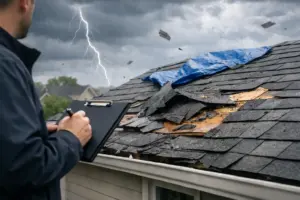
Missing shingles and obvious punctures are easy to spot, but many storm problems are subtle. Hail bruising, lifted seals, exposed fasteners, bent flashing, and granule loss may not be visible from the ground. Climbing onto a damaged roof can also be unsafe.
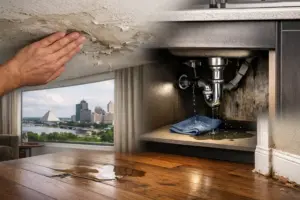
After a significant storm, check your attic for active drips or daylight, look for water stains on ceilings, and inspect the yard for fallen shingle pieces or metal fragments. Then schedule a professional roof inspection. Clear documentation can help you understand the condition of the roof and provide useful information if an insurance claim is warranted.
The right roof should give your family confidence when the forecast turns ugly. Choose a material built for the weather you face, but give equal weight to the crew installing it, the details behind the shingles or panels, and the warranty supporting the work. A careful inspection from a local professional such as Precision Roofing & Exteriors can turn a stressful roofing decision into a clear plan to protect your home.