A lot of foundation problems start quietly. You notice a little pooling near the front porch after a storm, a hairline crack in the brick, or mulch that keeps washing out of the same flower bed. What many homeowners do not realize is how gutters protect foundation performance over time by controlling where thousands of gallons of rainwater go.
In the Memphis area, that matters. We see heavy rain, fast-moving storms, humid conditions, and long stretches where the soil swings from very wet to very dry. When water is not managed correctly at the roofline, it usually ends up at the base of the house. That is where expensive problems begin.
How gutters protect foundation stability
Your roof collects a surprising amount of water. During a strong rain, that water has to go somewhere. Without a working gutter system, it pours straight off the roof edges and lands along the perimeter of your home.
That concentrated runoff does not just splash and disappear. It saturates the soil next to the foundation, digs trenches in landscaping, and creates repeated wet-dry cycles around the structure. Over time, those shifts can put pressure on foundation walls or cause the soil to expand, shrink, or wash away.
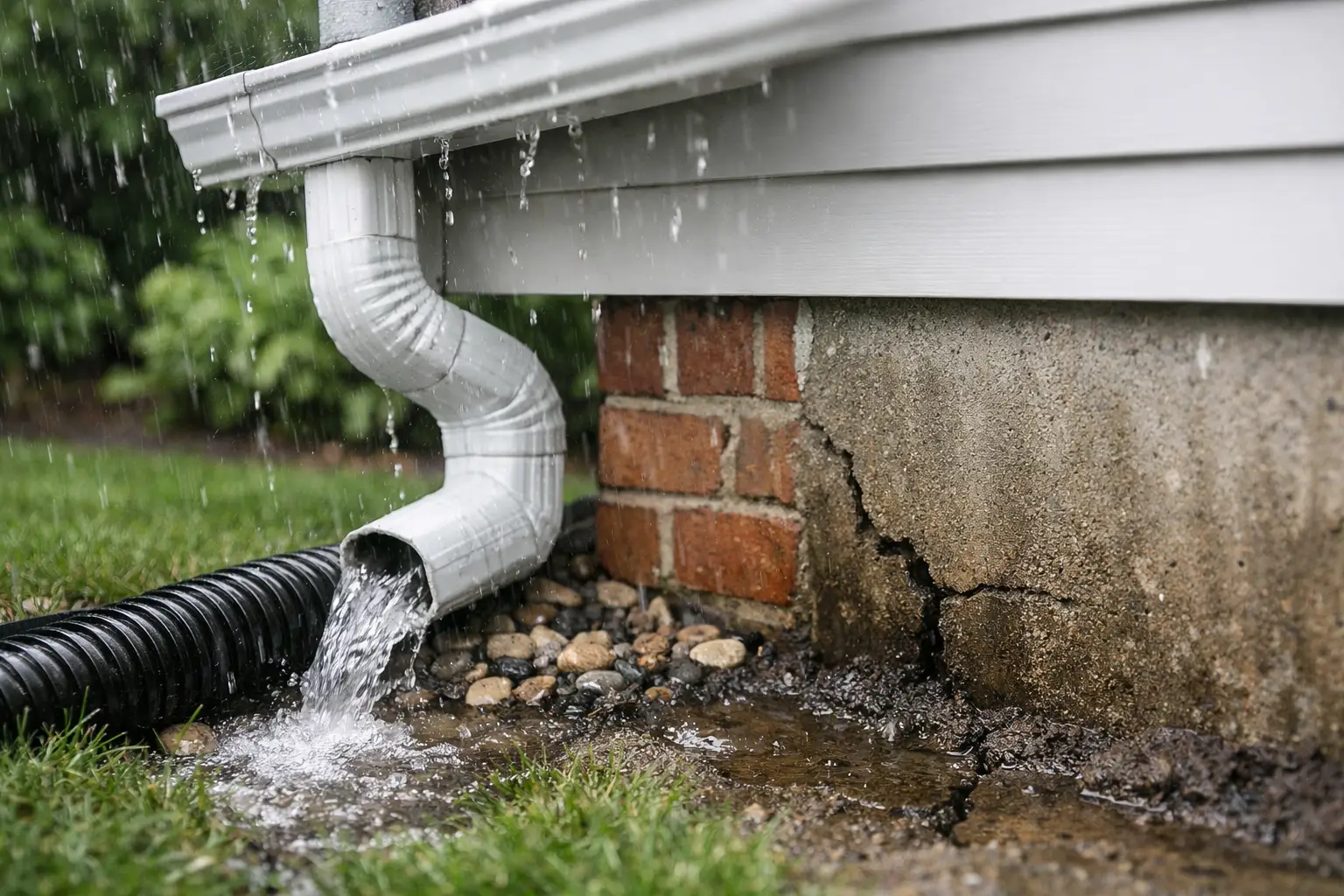
Gutters change that pattern. They catch roof runoff and move it to downspouts, where the water can be discharged farther away from the house. That simple redirection is the main reason how gutters protect foundation systems is not just a maintenance detail. It is a structural issue.
What happens when rainwater stays too close to the house
Foundations are built to support weight, but they are not meant to sit in constantly oversaturated soil. When water collects near the house again and again, several things can happen.
The first is soil erosion. If runoff keeps hitting the same areas, it can carry soil away from the base of the home. That leaves sections of the foundation with less support than they were designed to have.
The second is hydrostatic pressure. When water builds up in the soil around basement walls or crawlspace walls, it creates pressure that pushes against the structure. Even homes without full basements can feel the effects through cracking, water intrusion, or movement over time.
The third is uneven settling. Some soils expand when wet and contract when dry. If one side of the home stays wetter than another because of poor drainage, that imbalance can contribute to movement. It depends on the soil type, grading, and age of the home, but the risk is real.
Why this matters in Memphis-area conditions
Local weather patterns make gutter performance more important than many homeowners expect. Short, intense storms can dump a large volume of water in a hurry. If the gutter system is undersized, clogged, loose, or missing extensions, runoff tends to collect right where you do not want it.
Clay-heavy soils, which are common in many parts of the region, can make the problem worse. These soils often hold water and then shrink as they dry out. That constant cycle can be hard on foundations, patios, walkways, and driveways.
This is one reason a gutter issue should not be treated as a cosmetic annoyance. Overflow at the eaves might look minor, but if it happens every time it rains, the ground around your home is being affected every time too.
Signs your gutters may not be protecting the foundation
Some warning signs show up at the gutters themselves. Others show up much lower, around the landscaping and structure. If you see water spilling over the sides during rain, downspouts dumping right at the corner of the home, or sections pulling away from the fascia, your system may not be doing its job.
You might also notice bare spots in mulch beds, muddy trenches under roof edges, standing water near the slab, or mildew smells in a crawlspace. Inside the home, sticking doors, new cracks in drywall, or changes around window frames can point to movement that deserves attention.
Not every crack means foundation failure, and not every drainage issue leads to major structural repairs. But recurring water concentration around the perimeter is never something to ignore.
Gutters do not work alone
A gutter system is only one part of protecting the home. Good drainage depends on several pieces working together.
The gutters need to be properly sized for the roof area and local rainfall. The downspouts need enough capacity and should discharge far enough from the foundation. The slope of the gutters has to be correct so water moves instead of sitting. The ground should also be graded to carry water away from the house, not back toward it.
This is where trade-offs come in. A homeowner might install new gutters but still have drainage problems if the downspouts end too close to the home or the yard slopes the wrong way. On the other hand, perfect grading will not fully solve roof runoff that is pouring off the eaves without control.
Real protection comes from looking at the entire water-management path, from roofline to discharge point.
Seamless gutters make a difference
For many homes, seamless gutters are a smart upgrade because they reduce the number of joints where leaks can form. Fewer seams generally means fewer weak points, especially during heavy rain or after years of expansion, contraction, and debris buildup.
That does not mean sectional gutters always fail. Some perform well for a long time if they were installed correctly and maintained consistently. But seamless systems tend to offer better long-term reliability, a cleaner appearance, and less chance of water escaping where it should not.
For homeowners planning exterior improvements, this is one of those upgrades that protects more than curb appeal. It helps protect the structure below.
Maintenance is what keeps the system effective
Even a high-quality gutter system cannot protect the foundation if it is clogged with leaves, granules, or storm debris. Once water backs up, it usually finds the easiest exit point, which often means spilling over near the foundation line.
Regular cleaning matters, especially after storm season and during heavy leaf drop. It is also worth checking for loose fasteners, separated joints, sagging runs, and crushed or disconnected downspout extensions.
In some cases, gutter guards can help reduce debris buildup. They are useful on many homes, but they are not a cure-all. Performance depends on the tree coverage, roof design, and the specific product installed. Even guarded systems should still be inspected.
When repair is enough and when replacement makes more sense
Sometimes the fix is simple. A minor slope correction, a resecured section, or a better downspout extension can dramatically improve how water moves away from the home.
Other times, replacement is the better investment. If the gutters are rusted through, constantly clogging because of poor design, too small for the roof load, or repeatedly pulling away from the house, patchwork repairs may only delay the bigger issue.
This is where a professional inspection helps. A good contractor should be able to explain what is happening, show you where the water is going, and recommend the most practical solution without creating pressure. At Precision Roofing & Exteriors, that kind of straightforward assessment is part of helping homeowners protect the whole exterior, not just one component.
The cost of waiting is usually higher
Most homeowners do not think about gutters until they see overflow. By then, water may already be affecting fascia boards, soffits, siding, landscaping, and the soil around the foundation.
Foundation repairs are often far more expensive and disruptive than correcting drainage early. The same goes for crawlspace moisture issues, wood rot, and staining on masonry. Gutters are one of the least dramatic systems on a house, but they do some of the most important work during a storm.
If you are seeing pooling water, washout near the corners, or recurring overflow, it is worth having the system checked before the next hard rain tests it again. A well-designed gutter system does more than move water off the roof. It helps your home stay stable, dry, and easier to maintain for years to come.