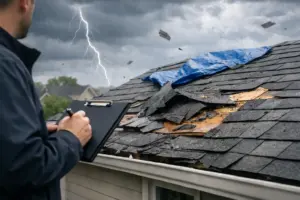
A hailstorm can leave your yard covered in ice and your roof looking perfectly normal from the driveway. That is what makes storm damage easy to miss. Knowing how to spot roof hail damage helps Memphis-area homeowners act before small impacts turn into leaks, interior repairs, or a more difficult insurance claim.
Hail damage is not always dramatic. A few missing shingles are obvious, but many damaged roofs show only subtle signs that the protective surface has been weakened. A careful ground-level check, followed by a professional inspection when conditions warrant it, is the safest way to protect your home.
Start With a Safe Post-Storm Check
Do not climb onto your roof after a storm. Wet shingles, steep slopes, loose granules, and damaged decking can make a roof unsafe even for experienced homeowners. You can gather useful information from the ground, from inside your attic, and by checking the areas around your home.
Start by noting the date of the storm and the approximate size of the hail, if you know it. Hail larger than about one inch can damage many common roofing materials, though the result depends on wind speed, roof age, shingle type, and the direction the storm came from. A newer impact-resistant roof may handle a storm differently than an older asphalt shingle roof that has already lost flexibility.
Take clear photos of anything unusual before cleanup begins. Photograph hailstones next to a ruler or coin if they are still present, along with damaged gutters, screens, siding, and outdoor equipment. Those details can help establish that your property was exposed to a significant storm.
How to Spot Roof Hail Damage From the Ground
Your roof is only part of the picture. Hail often leaves evidence on other exterior surfaces, and those signs can point to damage higher up.
Check Gutters, Downspouts, and Metal Components
Look for fresh dents, dings, chipped paint, or exposed metal on gutters, downspouts, gutter guards, roof vents, flashing, and metal chimney caps. These surfaces are easier to inspect than shingles and can show the force and direction of the hail.
A dented gutter does not automatically mean the roof needs replacement. Gutters and shingles respond to impact differently. Still, visible dents are a good reason to schedule a qualified roof inspection, especially if the storm produced larger hail or high winds.
Look at Window Screens, Siding, and Outdoor Fixtures
Torn window screens, cracked vinyl siding, pitted painted surfaces, damaged shutters, and dents on air-conditioning units are also useful clues. In the Memphis area, hail can arrive with strong wind, so inspect the sides of the home that faced the storm as well as the roofline.
Check wood fencing, deck rails, and mailboxes for fresh impact marks. These do not prove roof damage, but they help document the event and support the need for a closer evaluation.
Watch for Shingle Changes at the Roof Edge
From the ground, use binoculars if needed and look along the eaves, ridges, and valleys for shingles that appear cracked, lifted, torn, or missing. You may also notice darker spots where the shingle surface looks scuffed or uneven.
Avoid relying on color alone. Normal aging, tree shade, moisture, and manufacturing variation can all make shingles look different. The question is whether the change appears fresh, localized, and consistent with the storm.
What Hail Damage Looks Like on Asphalt Shingles
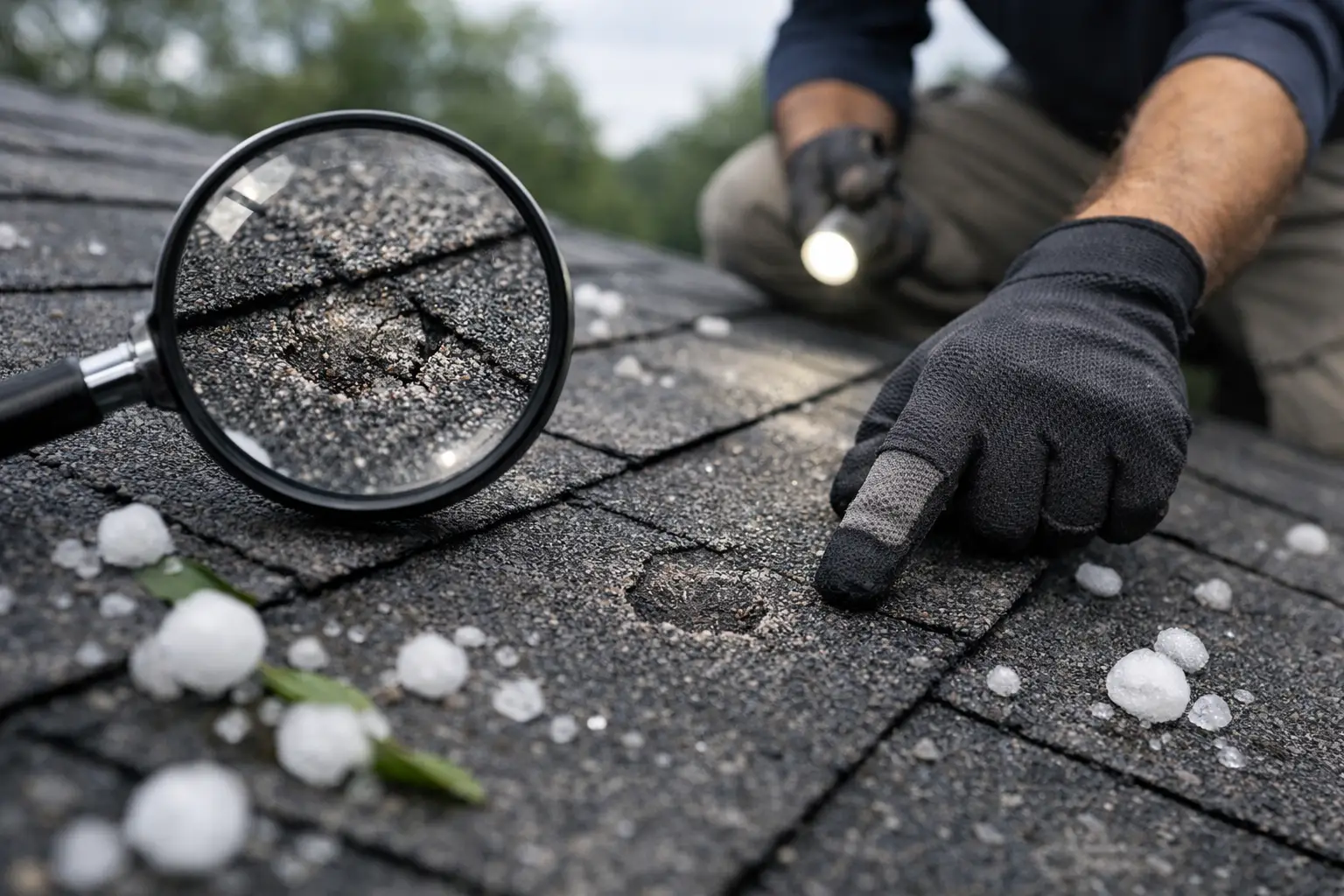
Asphalt shingles are common throughout the Mid-South, and hail damage often appears as a bruise rather than a clean hole. The impact can knock protective granules loose and weaken the asphalt layer beneath them. That may shorten the shingle’s service life even if water is not entering the home yet.
A trained inspector looks for impact marks with a distinct pattern. Typical hail damage may include:
- Dark, circular spots where granules have been displaced
- Areas that feel soft or bruised when carefully tested by a professional
- Small fractures or splits in the shingle mat
- Exposed asphalt that looks freshly scuffed rather than weathered
- Damage that appears on multiple slopes or follows the storm’s direction
Granule loss matters because granules help shield the asphalt from sunlight and weather. However, not every bare or dark spot is hail damage. Older shingles naturally lose granules over time, particularly near gutters and downspouts. Blistering, foot traffic, mechanical damage, and ordinary wear can also resemble storm damage.
That distinction matters for both your roof’s care and your insurance claim. An honest inspection should identify storm-related damage separately from age-related wear. A reputable contractor should never pressure you into filing a claim before there is a reasonable basis for it.
Check Inside the Home, Too
Roof hail damage does not always create an immediate leak, but your attic can reveal whether a roof is already allowing moisture inside. On a dry day, safely inspect the attic with a flashlight. Look for damp insulation, dark water stains on rafters or decking, mold-like growth, rusted nail tips, or daylight showing through areas where it should not.
Inside living spaces, check ceilings near exterior walls, around chimneys, and below roof valleys for yellow-brown rings, peeling paint, bubbling drywall, or a musty smell. These signs may come from a roof problem, but they can also be related to plumbing, condensation, or ventilation. A professional inspection can help identify the actual source before repairs begin.
If water is actively entering your home, move valuables away from the area, contain drips with a bucket, and call for emergency roofing help. Do not attempt a temporary repair during lightning, high winds, or unsafe weather conditions.
Why Hail Damage Is Easy to Overlook
A roof can lose years of useful life without showing a leak right away. Hail impacts may fracture the shingle’s surface while leaving the overall roof layout intact. Heat, sunlight, rain, and seasonal temperature changes can gradually worsen those weakened areas.
This delayed effect is why a post-storm inspection can be worthwhile even when your home seems fine. It is especially relevant if your roof is older, if neighbors are finding damage, or if local storm reports confirm large hail in your area.
At the same time, an inspection does not always lead to a replacement recommendation. Sometimes the roof has only minor cosmetic damage. Sometimes a focused repair is the more sensible option. The right next step depends on the roof’s age, the extent and location of impacts, current leaks, material condition, and warranty considerations.
When to Schedule a Professional Roof Inspection
Schedule an inspection soon after a hailstorm if you see dented metal components, damaged screens or siding, missing shingles, granules collecting heavily in gutters, or signs of moisture indoors. It is also wise to call if you are uncertain about the storm’s severity. A professional can inspect areas that are not visible from the ground and document the condition with photos.
For homeowners considering an insurance claim, timing and documentation are important. Most policies have specific reporting requirements, deductibles, and coverage limitations. A contractor can help explain what damage was found and provide a clear estimate, but only your insurer can determine coverage. Be cautious of anyone who promises claim approval or asks you to sign paperwork before explaining the scope of work.
Precision Roofing & Exteriors provides straightforward roof inspections for homeowners who want a clear answer after severe weather. The goal should be simple: understand your roof’s condition, know whether repair or replacement is appropriate, and make decisions without pressure or surprise costs.
Protect Your Roof Between Storms
You cannot prevent hail, but routine care makes damage easier to identify and address. Keep gutters clear so water can drain properly, trim branches that hang over the roof, and have aging shingles inspected before storm season. Save records of prior roof work, warranties, and maintenance because they can be helpful if damage occurs later.
After every major hail event, give your home a calm, careful look from the ground. A few minutes spent checking the exterior can provide the evidence and peace of mind you need to take the next step with confidence.