A roof can have quality shingles and still leak at its most vulnerable points. That is where flashing comes in. If you have asked, “what does roof flashing do,” the simple answer is that it directs water away from the places where your roof meets a wall, chimney, vent, skylight, or valley. It is a small part of the roofing system, but it plays a major role in protecting your home from water damage.
For homeowners in Memphis and the surrounding area, flashing matters even more. Heavy rain, high humidity, wind-driven storms, and seasonal temperature changes can expose small installation mistakes quickly. Properly installed flashing helps keep water on the outside of your home, where it belongs.
What Does Roof Flashing Do?
Roof flashing is typically made from galvanized steel, aluminum, copper, or another corrosion-resistant material. A professional roofer installs it in strategic areas where shingles alone cannot create a reliable water barrier.
Its job is not to stop water from touching the roof. Rain will always reach those transition points. Instead, flashing creates a controlled path for water to flow over, around, and away from openings and intersections. When it is installed correctly, water sheds onto the roofing material and continues safely toward the gutters.
Without flashing, water can slip behind shingles or siding, enter the roof deck, and travel farther than most homeowners expect. A stain on a ceiling may appear several feet away from the actual source of the leak. By the time water becomes visible indoors, moisture may have already affected insulation, framing, drywall, or attic ventilation components.
Where Roof Flashing Is Installed
Flashing is used anywhere the roof changes direction or connects with another part of the home. These areas require more care than an open field of shingles because they collect, redirect, or interrupt water flow.
Chimneys and Roof-to-Wall Connections
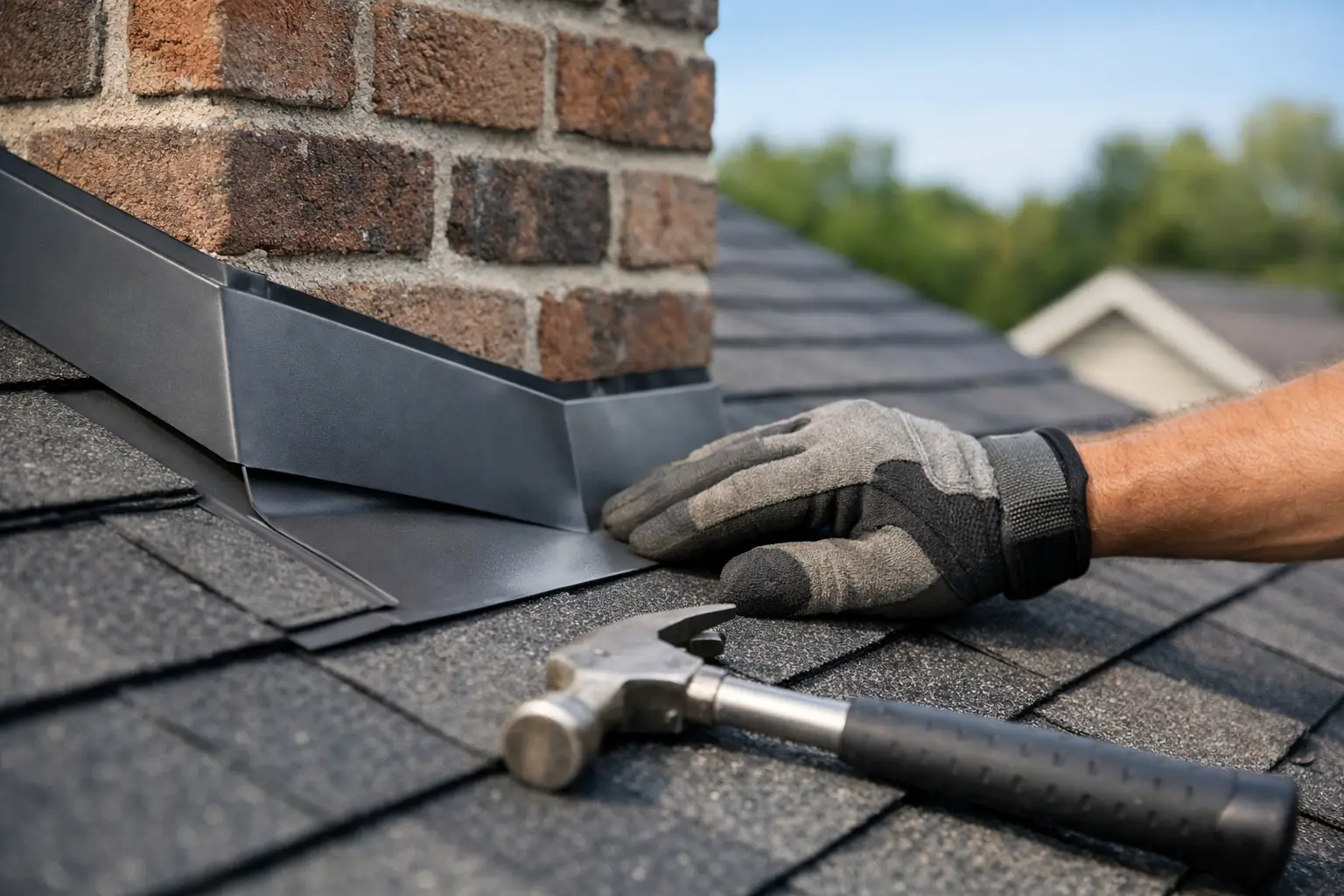
A chimney creates a large interruption in the roof surface. Flashing around its base must work with the shingles and masonry to guide water around the chimney rather than behind it. This usually includes step flashing along the sides, base flashing at the bottom, and counterflashing integrated into the masonry.
Roof-to-wall connections need similar protection. When a sloped roof meets a vertical wall or dormer, step flashing is installed in layers with the shingles. Each piece overlaps the next so water moves down and out instead of finding a path behind the exterior finish.
Skylights, Vents, and Pipe Penetrations
Anything that passes through the roof needs flashing. Plumbing vent pipes, attic vents, exhaust vents, and skylights all create openings that must be sealed and properly directed for drainage.
A skylight is especially dependent on correct flashing details. Caulk alone is not a long-term solution. Quality skylight flashing uses overlapping components designed for the roof’s slope and the specific roofing material. If you notice staining near a skylight, loose shingles around it, or water after a hard storm, an inspection is the right next step.
Valleys and Roof Edges
Roof valleys are the channels where two roof slopes meet. They handle a concentrated amount of rainwater, especially during the strong downpours common in the Mid-South. Valley flashing, when used, adds another layer of protection beneath or alongside the shingles so that water has a durable route toward the gutter system.
Drip edge flashing is installed along roof edges. At the eaves, it helps guide water into the gutters rather than behind the fascia board. Along rake edges, it helps protect the roof deck from wind-driven rain. It may not be highly visible from the street, but it is an important detail for preserving the wood components around your roofline.
Why Flashing Failures Cause Serious Leaks
Flashing failures are often blamed on “old caulk,” but the underlying problem can be more complicated. Flashing may be bent, corroded, improperly overlapped, nailed in the wrong place, or covered by a previous repair that did not address the original water path.
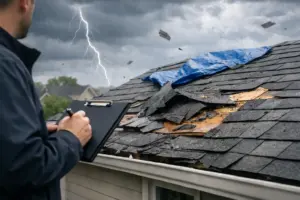
Storm damage can also lift shingles or loosen flashing at a roof penetration. Wind may create a small gap that admits water only during rain blowing from a certain direction. That makes the issue easy to miss during a dry-weather inspection and frustrating for homeowners who see an occasional leak.
Age is another factor. Roofing sealants and pipe boots naturally wear over time, while expansion and contraction can stress metal components. Aluminum can corrode when it contacts incompatible materials. Galvanized steel can rust after its protective coating is compromised. Copper lasts longer but costs more and is usually selected for specific architectural or premium roofing applications.
The key point is that flashing is a system, not just a strip of metal. Its performance depends on correct sizing, overlap, fastener placement, underlayment integration, and compatibility with the surrounding roof materials.
Signs Your Roof Flashing May Need Attention
You do not need to climb onto your roof to identify every flashing concern. Some warning signs show up inside the home or from the ground. Look for water spots on ceilings near chimneys, skylights, or exterior walls; peeling paint or soft wood around the roofline; rusted metal near roof penetrations; and missing or cracked sealant around vent pipes.
You may also notice loose shingles near a chimney or wall, damp insulation in the attic, or a musty smell after rain. These signs do not always mean the flashing is the only problem. A leaking roof can involve shingles, underlayment, ventilation, gutters, masonry, or siding details. That is why a complete inspection is more valuable than a quick patch based on an assumption.
If water is actively entering the home, move belongings away from the affected area, place a container beneath the drip if needed, and contact a qualified roofing professional promptly. Waiting can turn a manageable repair into a larger restoration project.
Repairing Flashing vs. Replacing It
Whether flashing should be repaired or replaced depends on its condition and how it was originally installed. A minor issue, such as a failed seal around a pipe boot or a small section loosened by wind, may be corrected with targeted repair work. The roofer should still inspect the surrounding shingles, decking, and underlayment to confirm water has not traveled beneath the surface.
Replacement is usually the wiser choice when flashing is rusted through, improperly integrated, repeatedly leaking, or being disturbed during a roof replacement. Reusing old flashing can save a little money upfront, but it may create a weak point in an otherwise new roofing system.
For roofs nearing the end of their service life, repeated flashing repairs can be a sign that a larger plan is needed. Replacing shingles without addressing worn or incorrectly installed flashing is not a lasting solution. A properly scoped roof replacement includes the details that protect the roof at its most leak-prone locations, not just the shingles visible from the driveway.
What Professional Flashing Installation Should Include
High-quality flashing work begins with an accurate assessment of the roof’s design and condition. The installer should identify every penetration, wall intersection, valley, chimney, and edge detail that requires water management.
During installation, flashing should be layered so water flows downward over each course, never toward an exposed seam. Step flashing should be woven with shingles, not simply placed on top of them. At chimneys and walls, counterflashing or appropriate termination details should protect the upper edge from water intrusion. The work should also follow local code requirements and manufacturer installation standards, which can affect warranty coverage.
Just as important, the roof should be evaluated as part of the full exterior system. Gutters that overflow, damaged siding near a roof-to-wall connection, or poor drainage around a chimney can all add stress to areas that flashing is designed to protect. Precision Roofing & Exteriors takes this whole-home approach because the best repair is one that addresses the source of the problem, not only the visible symptom.
A careful flashing inspection can provide real peace of mind before the next storm rolls through. If your roof has a recurring leak, aging penetrations, storm damage, or a skylight that has started to concern you, a professional inspection can help you understand what is happening overhead and what it will take to protect your home with confidence.