A roof replacement is one of the most effective ways to protect your home from Memphis-area storms, humidity, wind, and summer heat. It is also an active construction project: materials arrive, old shingles come off, crews move across the roof, and debris is removed throughout the day. Knowing how to prepare home for roof replacement helps protect your property, keeps your family comfortable, and gives your roofing crew the access they need to work efficiently.
A professional crew should handle containment, cleanup, and the installation itself. A little preparation from the homeowner, however, can prevent avoidable damage and make the experience far less disruptive.
Prepare Home for Roof Replacement Before Materials Arrive
Your contractor should tell you when material delivery and installation are scheduled. Use that window to walk around your property and identify anything that could be affected by falling debris, crew traffic, or a truck parked near the home.
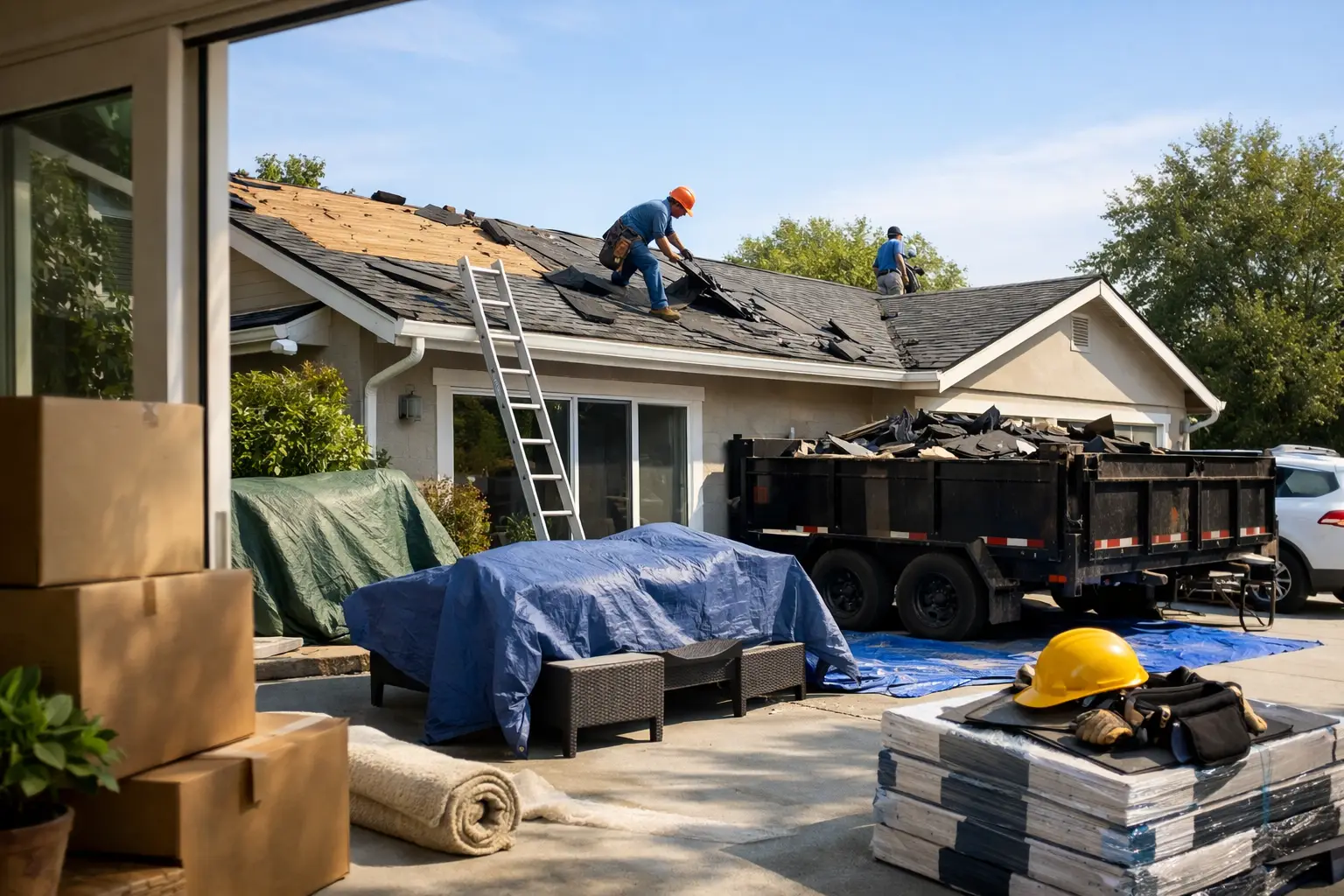
Start with your driveway. Roofing materials, dumpsters, and work vehicles need a clear path, so move cars out of the garage and away from the driveway before the crew arrives. If possible, park on the street or arrange to be elsewhere during the busiest part of the project. This also prevents vehicles from being boxed in while roofing materials are staged.
If you have a gate, make sure it is unlocked and accessible. Crews often need access to both the front and back of the house to set up tarps, remove debris, and perform a thorough magnetic nail sweep after the work is complete. Let your project manager know about narrow access points, delicate hardscaping, irrigation controls, or other site conditions that may affect setup.
Protect Outdoor Furniture and Landscaping
Move patio furniture, grills, potted plants, outdoor décor, and children’s play equipment away from the home. A good rule is to clear the area at least 10 to 15 feet from the exterior walls when space allows. Covering items can help with dust, but relocating them is the safer choice.
Landscaping deserves special attention. Shrubs, flower beds, and small ornamental trees near the home can be vulnerable to falling shingle pieces and foot traffic. Water plants the day before work begins if conditions are dry, since hydrated plants tend to recover better from minor disturbance. Point out prized plants, new landscaping, or fragile features to your roofing contractor during the pre-project walkthrough.
Most reputable roofing teams use protective tarps and careful cleanup practices, but no roof replacement is completely free of dust or debris. Moving what you can and communicating what cannot be moved creates the best protection.
Make the Inside of Your Home Ready
Roofing work can cause vibration, especially during tear-off. The sound is temporary, but it can shake items on walls, shelves, and upper-floor surfaces.
Walk through rooms directly below the roofline and remove fragile objects from shelves, mantels, and wall displays. Secure mirrors, framed artwork, and decorative items that could shift. If you have an attic, cover stored belongings with sheets or plastic drop cloths. Fine dust may enter through small gaps around attic ventilation or older framing, particularly when an existing roof is being removed.
You do not need to empty your entire home. Focus on breakable items and spaces closest to the roof. For homes with vaulted ceilings, attached garages, or finished attic rooms, take a few extra minutes to protect belongings in those areas.
Plan for Noise, Pets, and Children
A roof replacement is loud. There will be nail guns, compressors, footsteps overhead, trucks, and the sound of old materials being removed. For many homes, the most intense activity lasts one to two days, though the schedule depends on roof size, weather, material choice, and any underlying repairs discovered during installation.
If you work from home, plan calls and focused tasks around the project or work from another location for the day. Consider infants, older family members, and anyone sensitive to sustained noise. Let nearby neighbors know about the scheduled work as a courtesy, especially if vehicles may temporarily affect street parking.
Pets are often the most stressed by roofing activity. Keep dogs and cats indoors, ideally in a quiet room away from exterior doors. A pet daycare visit, boarding arrangement, or day with a family member may be worthwhile for anxious animals. Do not allow pets into the yard until the final cleanup is complete and your contractor confirms the area is safe.
Give Your Roofing Crew Safe, Clear Access
Roofers need room to work safely, and small access issues can slow down an otherwise straightforward project. Unlock side gates, clear walkways, and make sure exterior outlets are accessible if the crew needs power. If an outlet is controlled by a switch inside the house, let the project manager know.
Keep children, pets, and visitors away from work zones. Even when a crew maintains a clean site, roofing involves tools, ladders, loose materials, and debris coming down from above. The safest approach is to treat the driveway and perimeter of the house as off-limits until the final walkthrough.
If you have a pool, pond, outdoor kitchen, solar equipment, satellite dish, or mounted security cameras, discuss it before installation day. Some features may need temporary protection, adjustment, or coordination with another service provider. It depends on their location and whether they interfere with the new roofing system or safe crew access.
Keep Communication Simple and Direct
Before work begins, confirm the best point of contact for the crew and make sure your phone is available. You may not need to stay home, but the project manager should be able to reach you if a hidden issue is found after tear-off or if weather changes the schedule.
Ask in advance how the contractor will handle unexpected decking damage, rotten fascia, or ventilation concerns. A detailed, itemized estimate should explain what is included and how additional work is communicated and approved. Clear expectations protect you from surprises and help the project keep moving.
For storm-related replacements, keep insurance documents, claim information, and adjuster details in one easy-to-find place. If your contractor is assisting with the claim process, confirm which photos, estimates, and records are still needed before installation begins.
Protect Your Routine During Installation
Think through the practical details of a workday before the first truck arrives. If you need to leave by a certain time, move your vehicle the night before. If you have a delivery scheduled, medical appointment, home service visit, or lawn crew planned, consider rescheduling it. Too many people moving through the work zone can create unnecessary confusion.
Keep windows closed during construction to reduce noise and dust inside the home. If your HVAC system has a fresh-air intake near the work area, ask your contractor whether any temporary precautions are recommended. Most homes do not require special HVAC steps, but older systems or unusual vent locations may call for extra care.
You may also want to take down exterior holiday lights, hanging baskets, wind chimes, and flags. These items can obstruct access, get damaged, or make it harder for the crew to inspect flashing and roof edges properly.
Know What a Professional Cleanup Should Include
The job is not finished when the last shingle is installed. Cleanup is part of a quality roof replacement. Your contractor should remove old materials, collect visible debris, and perform a magnetic sweep for loose nails around the home, driveway, and landscaping.
After the crew leaves, take a careful walk around the property with your project manager during the final walkthrough. Check the driveway, patios, decks, gutters, and areas where materials were staged. Ask about any new ventilation components, flashing details, warranty paperwork, and recommended maintenance for your new roof.
It is reasonable to expect a clean property, but remember that a magnetic sweep is most effective when the ground is clear and dry. If heavy rain, mud, thick leaves, or dense mulch limit visibility, ask when a follow-up sweep can be completed.
A Better Start to a Protected Home
Preparing for a roof replacement does not mean managing the project yourself. It means clearing the way for skilled installers to protect your home with less disruption and fewer worries. When your contractor communicates clearly, respects your property, and completes a careful final walkthrough, you can focus on what matters most: feeling confident that your home is ready for the next Memphis storm season.