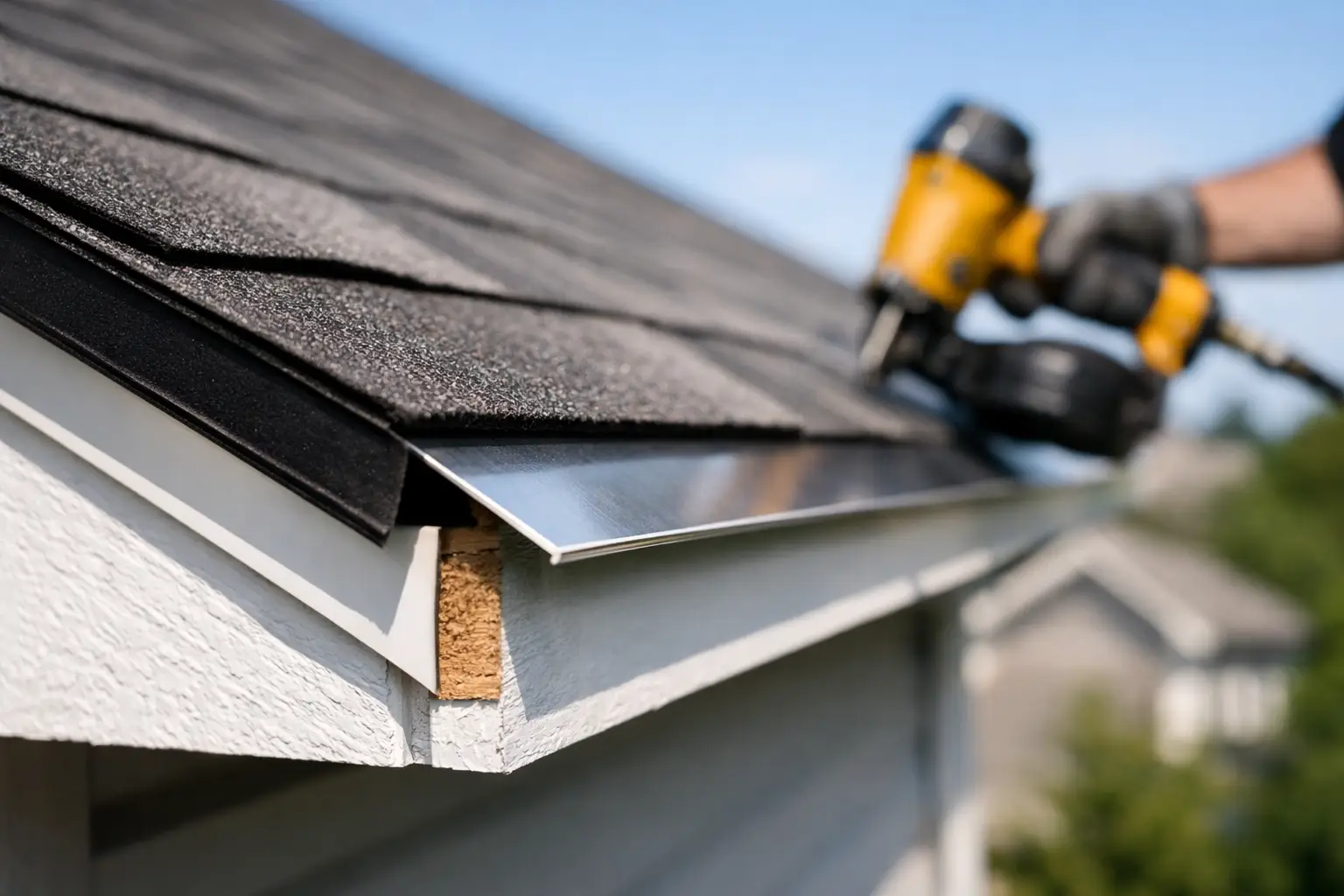
A roof can look perfectly sound from the driveway and still have a small weak point at its edges. That is where water collects, runs toward the fascia, and can work its way into wood that was never meant to stay wet. So, what is drip edge? It is a thin piece of formed metal flashing installed along the edges of a roof to guide rainwater away from the roof deck, fascia boards, and the areas around your gutters.
For Memphis-area homeowners, this simple component matters more than its size suggests. Our heavy rain, humidity, wind-driven storms, and seasonal debris put roof edges under real pressure. A properly installed drip edge helps your roofing system shed water where it belongs instead of allowing it to soak into the structure supporting your roofline.
What Is Drip Edge on a Roof?
Drip edge is typically made from aluminum, galvanized steel, or copper. It has a bent profile that extends beneath the roof covering and out past the edge of the roof. The outward lip creates a clear path for water to drip away from the building rather than cling to the underside of shingles or run back toward the wood.
You will usually find drip edge in two primary locations: along the eaves, which are the lower edges where gutters are installed, and along the rakes, which are the sloped edges at the ends of a gable roof. These locations handle water differently, so correct placement and layering matter.
At the eaves, drip edge helps direct water into the gutter. Along rakes, it helps protect the exposed edge of the roof deck from wind-blown rain. It also gives the roofline a cleaner, more finished appearance by covering the rough edge of the decking.
Why This Small Piece of Metal Protects So Much
Shingles are designed to shed water down the slope of a roof. They are not designed to protect every exposed edge of the underlying wood on their own. Without drip edge, rain can follow the surface tension of the shingle, travel backward, and reach the fascia or roof decking.
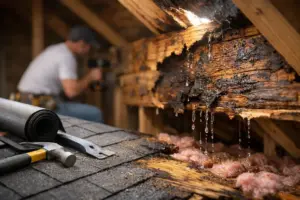
That moisture may not cause a visible problem after one storm. Over time, however, repeated wetting can lead to peeling paint, stained soffits, softened fascia, rotted roof decking, and mold-friendly conditions. Once wood deterioration begins around the roof edge, repairs can involve more than replacing a strip of trim. Gutters may loosen, shingle edges may deteriorate, and water can eventually find a route into the attic or wall system.
Drip edge also helps protect against wind-driven rain. During a strong Memphis thunderstorm, rain does not always fall straight down. It can be pushed beneath shingle edges and into vulnerable areas around the perimeter of the roof. Correctly installed metal edging adds a layer of defense where weather exposure is often highest.
Drip Edge, Gutters, and Fascia Work Together
Homeowners often assume gutters alone control roof runoff. Gutters are essential, but they work best when the water reaches them properly. Drip edge bridges the gap between the roof and the gutter, encouraging runoff to fall into the gutter channel instead of behind it.
When water repeatedly runs behind a gutter, the fascia board can absorb moisture. You may notice dark staining, bubbling paint, sagging gutters, or small gaps between the gutter and roofline. Those symptoms do not always mean the gutter itself is the only problem. They can point to missing, damaged, or incorrectly installed drip edge.
The relationship between these components is especially relevant when replacing a roof or installing seamless gutters. A contractor should evaluate the roof edge, fascia condition, and gutter placement as one drainage system. Treating each piece separately can leave a gap where water still has a chance to cause damage.
How Drip Edge Is Installed Correctly
Good roof-edge installation is about the order of the materials, not just the presence of metal. At the lower eaves, drip edge is generally installed beneath the underlayment so any water reaching the underlayment can flow over the metal and into the gutter. Along the rake edges, it is generally installed over the underlayment to help keep wind-driven water from getting underneath.
This difference is one reason roof replacement is not simply a matter of nailing down new shingles. The crew must account for water flow, wind exposure, deck condition, flashing details, ventilation, and the manufacturer’s installation requirements. A small mistake in layering can redirect water toward the roof deck instead of away from it.
The metal should be fastened securely and installed with appropriate overlap between sections. It should extend far enough to direct water into the gutter without interfering with the gutter system. Corners and transitions deserve special attention because they are common places for poorly fitted materials to create openings.
Color matters, too, although appearance comes after performance. Drip edge is available in colors that can complement shingles, trim, and gutters. On a professionally finished roof, the edging should look intentional and straight while still doing the practical work of protecting the structure.
Is Drip Edge Required on Every Roof?
In most modern roofing projects, drip edge is expected and commonly required by building codes. Current code requirements can depend on the local jurisdiction, the roof design, and the scope of work, so homeowners should not rely on a one-size-fits-all answer. A qualified local contractor should install roofing components in accordance with applicable code requirements and the shingle manufacturer’s specifications.
There are also situations where an older home may have little or no visible drip edge. That does not automatically mean the roof is failing today, but it does deserve attention during an inspection. Older roof systems sometimes relied on gutter aprons, extended shingles, or other details that do not offer the same level of protection as a properly formed drip edge.
If you are getting estimates for a roof replacement, ask whether drip edge is included and where it will be installed. An itemized estimate should make clear what edge metal, underlayment, flashing, and ventilation work are part of the project. Clear answers early help prevent surprises later.
Signs Your Drip Edge May Need Attention
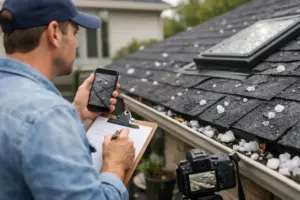
From the ground, drip edge can be difficult to inspect closely. Still, a few exterior clues can suggest an issue around the roof edge. Watch for water stains on fascia or soffits, gutters that pull away from the home, peeling paint near the eaves, visible gaps at shingle edges, or rotted wood around the roofline.
You might also notice that water overshoots the gutter during ordinary rain, even when the gutter is not clogged. Sometimes the gutter pitch or capacity is the problem. In other cases, the roof edge does not direct runoff into the gutter correctly. The right repair depends on the cause, which is why an inspection is more useful than guessing based on one symptom.
After a windstorm, look for bent or lifted metal along the roof perimeter. Do not climb onto the roof to investigate. Loose edge metal can be sharp, and storm damage can make a roof surface unsafe. A professional inspection can identify whether the drip edge can be secured, whether fascia repairs are needed, or whether the issue is part of larger roof damage.
Can Drip Edge Be Added Without Replacing the Roof?
Sometimes, yes. Drip edge can be added or repaired on an existing roof, particularly when there is localized damage or an exposed edge that needs better protection. The feasibility depends on the age and condition of the shingles, how the existing underlayment was installed, the gutter setup, and whether the roof decking or fascia has already been affected.
Adding drip edge to a roof near the end of its service life can be a practical short-term measure in some cases, but it may not address worn shingles, failing flashing, or hidden wood damage. On the other hand, replacing an entire roof solely because of a small section of damaged edge metal may not be necessary. An honest assessment should distinguish between a targeted repair and work that is better handled as part of a complete replacement.
For a new roof, drip edge is not an upgrade to skip in order to trim the estimate. It is a fundamental finishing detail that supports the performance of the shingles, underlayment, fascia, and gutters around it.
A Better Question Than “Do I Have Drip Edge?”
The better question is whether your roof edge is managing water correctly. A roof can have drip edge that is bent, undersized, poorly layered, blocked by debris, or positioned so water still runs behind the gutter. It can also have sound metal edging but damaged fascia from years of earlier exposure.
A thorough roof and exterior inspection looks at the whole path of water – from the shingles, across the roof edge, into the gutters, and safely away from the foundation. That is the level of care homeowners should expect from any contractor working on a roofline.
When rain starts hitting your home sideways or pouring off the roof in sheets, the smallest details often do the most meaningful work. A properly installed drip edge is one of those quiet protections that helps keep a roof system, gutter system, and home exterior working together for years to come.