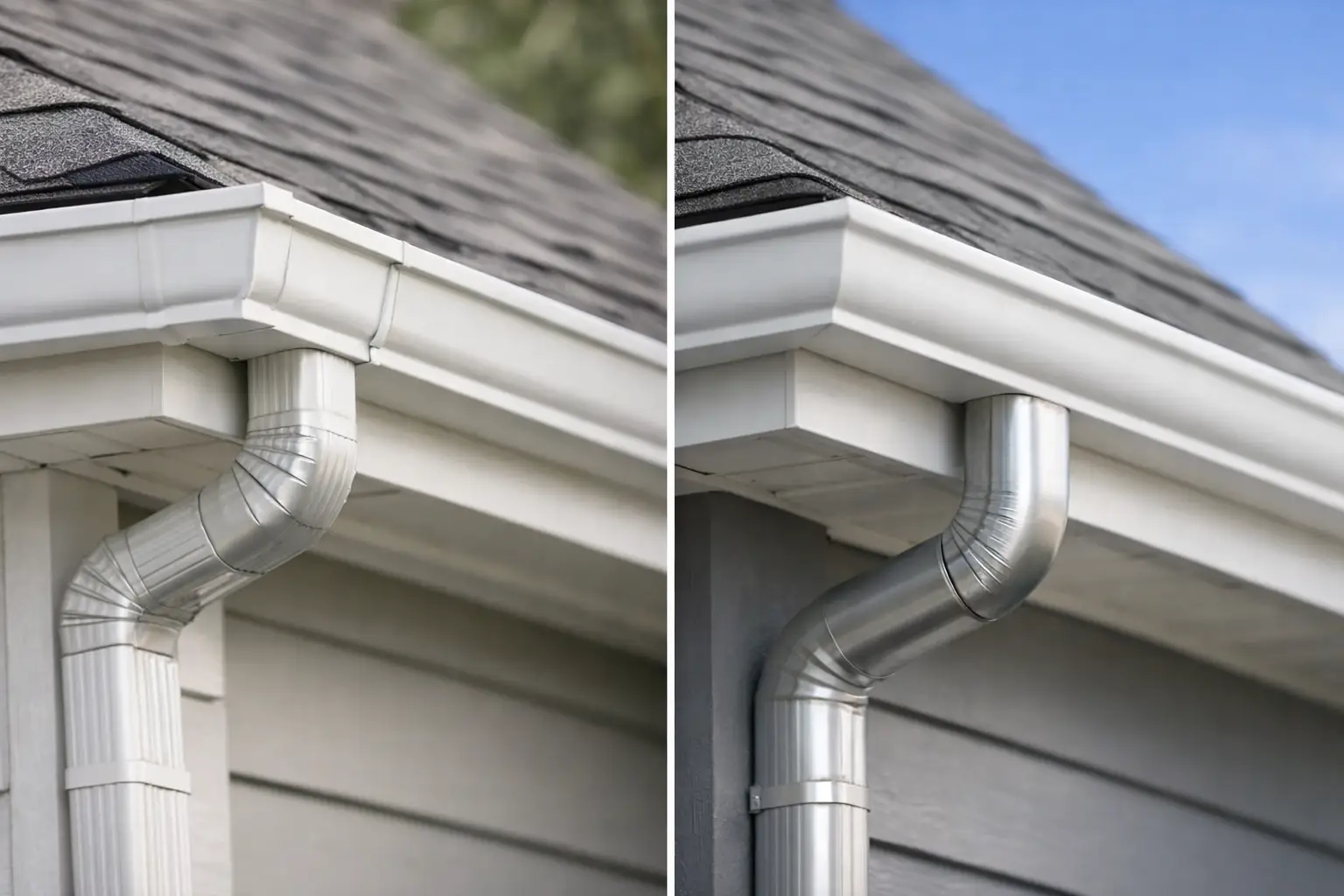
A gutter system can look like a minor detail until a Memphis downpour sends water over the edge, against the siding, or toward the foundation. When homeowners compare sectional gutters vs seamless gutters, the real decision is not simply about appearance. It is about controlling water, reducing future repairs, and choosing an installation that fits the home’s budget and long-term needs.
For many homes in Memphis, Germantown, Olive Branch, and nearby communities, seamless gutters are the stronger investment. That said, sectional gutters can still make sense in a few specific situations. The right answer depends on the home’s roofline, drainage challenges, material choice, and how long you expect the system to serve your property.
What Are Sectional Gutters?
Sectional gutters are assembled from pre-cut lengths that are joined together during installation. You may see them sold in standard sections at home improvement stores, often in vinyl, aluminum, or steel. Straight runs are connected with seams, while separate pieces are used for corners, end caps, outlets, and downspouts.
Their biggest advantage is upfront accessibility. Materials are widely available, repairs can be straightforward when damage is limited to one section, and the initial price is often lower than a custom-formed system. For a small shed, detached garage, or a short-term repair, those benefits can be practical.
The trade-off is that every connection is a potential maintenance point. Sealant ages. Fasteners can loosen. Leaves and roof grit can settle near joints, holding moisture where it does not belong. A sectional system may perform well initially, but it generally asks more of the homeowner over time.
What Are Seamless Gutters?
Seamless gutters are formed on-site to match the exact length of each roof edge. Rather than joining standard pieces along a straight run, an installer uses a gutter-forming machine to create one continuous piece of material for that section of the home. There are still joints at corners, end caps, and downspout outlets, but there are far fewer seams overall.
Most professionally installed seamless gutter systems are aluminum, although other material options are available. Aluminum is a popular choice because it is lightweight, resists rust, and comes in many colors that can complement the roof, siding, trim, and exterior finish.
Custom sizing also matters. A contractor can evaluate roof pitch, drainage area, valleys, and the placement of downspouts before recommending gutter size and layout. That is especially valuable on homes with complex rooflines or areas that receive heavy runoff during fast-moving storms.
Sectional Gutters vs Seamless Gutters: The Key Differences
Leak risk and maintenance
The clearest difference is the number of seams. Sectional gutters have joints at regular intervals along each run. Those joints rely on sealant and can eventually leak, particularly after repeated temperature changes, debris buildup, or shifting caused by wind and storms.
Seamless gutters have fewer places for water to escape. They are not leak-proof forever, because corners and outlets still need attention, but eliminating most straight-run joints removes a common source of failure. For homeowners who want less routine upkeep, this is a meaningful advantage.
No gutter system is maintenance-free. Gutters still need to be cleaned, inspected, and kept properly secured to the fascia. If your property has mature trees, gutter guards may be worth discussing as part of a complete drainage plan. The goal is not to avoid maintenance altogether. It is to avoid preventable weak points.
Cost now versus value over time
Sectional gutters usually cost less at the start because they use off-the-shelf pieces and may be installed without specialized equipment. This can be appealing when a homeowner needs a quick fix or has a limited project budget.
Seamless gutters typically cost more because each run is custom-formed and professionally installed. However, a higher initial investment can be easier to justify when you consider fewer leak-prone joints, a more tailored fit, and reduced likelihood of repeated patching or section replacement.
The least expensive option is not always the least costly over the life of the home. Water damage to fascia boards, siding, landscaping, foundations, or basement areas can quickly outweigh the difference in gutter installation price. A sound system should direct water away from the structure consistently, not merely catch water for a season or two.
Appearance and curb appeal
Sectional gutters can look clean when newly installed, especially on a simple roofline. Over time, though, visible connectors and uneven sections can make the system look pieced together. Vinyl options may also fade, become brittle, or sag in strong heat and weather exposure.
Because they are made for the home’s exact dimensions, seamless gutters typically provide a more finished appearance. Long, continuous runs create cleaner lines along the eaves, and color-matched aluminum can blend naturally with exterior trim. For homeowners planning to sell, replace siding, or update roofing, that polished result can support overall curb appeal.
Strength and fit
A gutter’s performance depends on more than whether it has seams. Hanger spacing, slope, outlet size, downspout placement, and fastening method all influence how well the system handles water. A poorly installed custom system can still overflow, and a carefully installed sectional system can work acceptably on the right structure.
Still, seamless gutters tend to offer a better fit for residential homes because they are measured for the actual roofline. Professional installation also allows the crew to identify trouble spots, such as valleys that dump concentrated water into one area or downspouts that discharge too close to the foundation.
When Sectional Gutters May Be the Better Choice
Sectional gutters are not automatically the wrong choice. They can be appropriate for a detached outbuilding, a very short gutter run, or a temporary repair when a larger exterior project is already planned. They may also fit a homeowner who is comfortable performing regular maintenance and expects to replace or reconfigure the system in the near future.
They can be useful when replacing a single damaged piece on an existing sectional system, provided the surrounding gutters remain in good condition. In that case, replacing the entire system may not be necessary.
For a primary residence, however, the calculation often changes. If gutters are overflowing, pulling away from the fascia, leaking at multiple joints, or sending water near the home, a full custom solution is usually more dependable than adding another patch.
Signs Your Home Needs More Than a Gutter Repair
Water marks beneath gutter seams, peeling paint on fascia boards, soil erosion near the foundation, and mildew on exterior walls are all signs that drainage deserves prompt attention. You may also notice gutters that sag, overflow during ordinary rain, or dump water from one end of the roofline because the slope is off.
Look beyond the gutter channel itself. Downspouts should carry water away from the home, and the discharge area should not direct runoff back toward the foundation. If your roof has recently been replaced, it is also a smart time to inspect the gutters. Damaged, undersized, or poorly pitched gutters can limit the protection provided by an otherwise excellent roof.
A professional inspection is particularly helpful after severe weather. Storm damage can bend gutters, loosen hangers, dent downspouts, and damage fascia that supports the system. Catching those concerns early helps prevent a small drainage issue from becoming a more involved exterior repair.
Choosing the Right Gutter System for a Memphis-Area Home
For most homeowners seeking a durable, low-stress solution, professionally installed seamless aluminum gutters are the better choice. They provide cleaner lines, fewer joints along each run, and a custom fit designed around how water actually moves off the roof.
The best system also accounts for the complete exterior. Roofing, siding, fascia, and drainage work together to protect your home. Precision Roofing & Exteriors approaches gutter recommendations with that full picture in mind, so homeowners receive a clear assessment rather than a one-size-fits-all answer.
If you are seeing overflow, leaks, sagging, or erosion around your home, do not wait for the next heavy storm to test the system again. A straightforward gutter inspection can identify where water is going and what it will take to keep it moving safely away from the home.