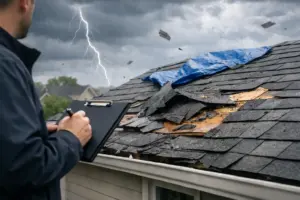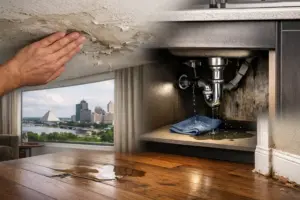
A brown ceiling stain can become a steady drip faster than most homeowners expect, especially after a Memphis thunderstorm. Emergency roof leak repair starts with protecting people and property inside the home, then finding the actual source of the water before a small opening turns into damaged insulation, mold growth, or a compromised ceiling.
A leak does not always mean the entire roof needs replacement. It may be a lifted shingle, failed flashing around a chimney, an aging pipe boot, storm damage, or water backing up near a clogged gutter. The right response depends on the roof’s condition, the source of the leak, and how much moisture has already reached the structure.
What to Do First When Your Roof Leaks
Your first priority is safety. If water is near light fixtures, outlets, electrical panels, or wiring, avoid the area and shut off power to that part of the home only if you can do so safely. Never climb onto a wet roof during rain, high winds, or after dark. Slippery shingles and hidden damage make a quick inspection far riskier than it is worth.
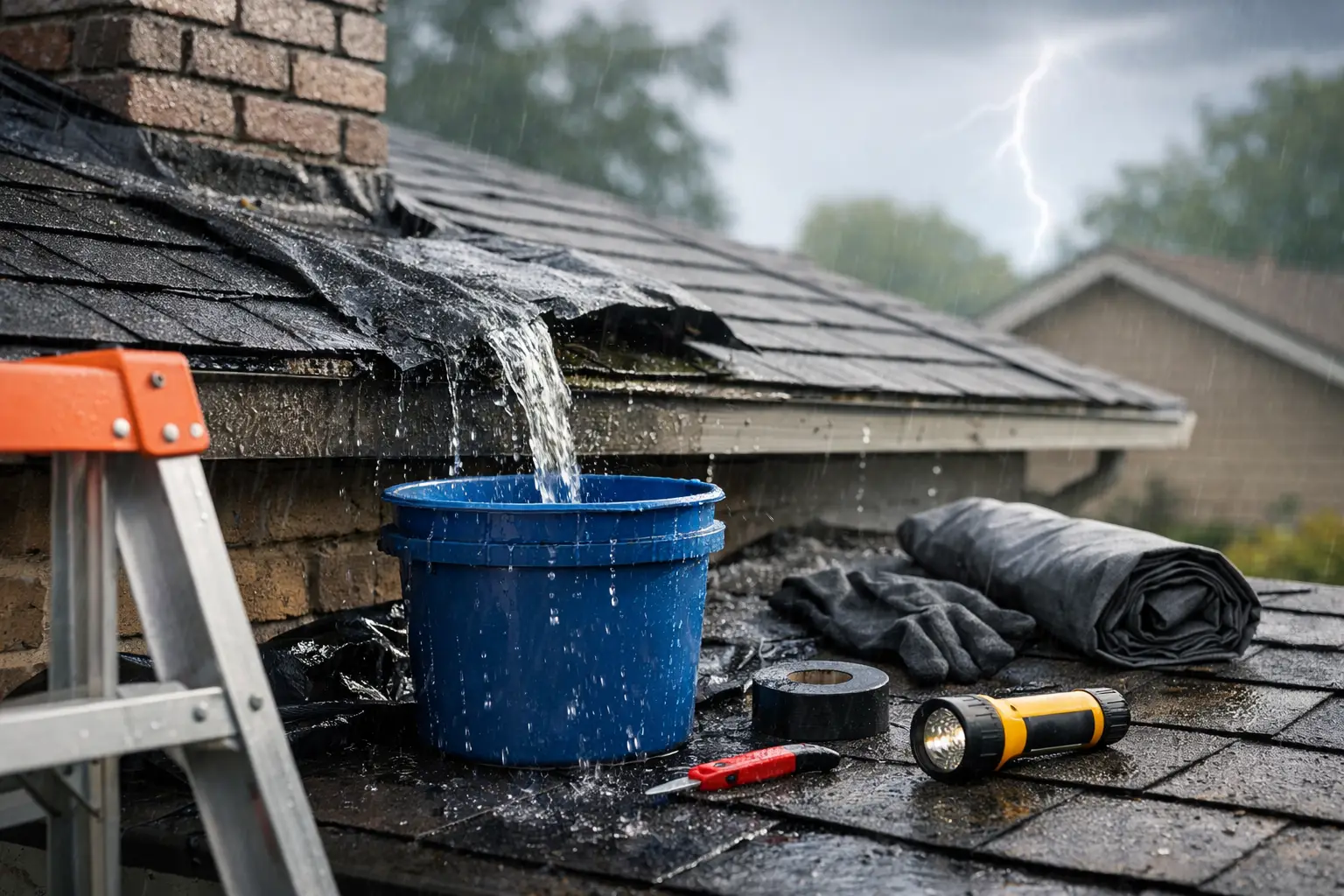
Move furniture, electronics, rugs, and valuables away from the affected area. Place a bucket or deep container beneath active drips, and use towels to contain splashing. If the ceiling is bulging with trapped water, do not ignore it. A water-filled ceiling can collapse without much warning.
If it is safe to do so, place a tarp or plastic sheet over belongings beneath the leak. This does not fix the roof, but it can reduce damage while you arrange a professional assessment. Take clear photos and short videos of the stain, dripping water, damaged belongings, and any visible exterior damage from the ground. Documentation can be useful if storm damage leads to an insurance claim.
Why the Drip Is Rarely the Source
Water travels. The point where it appears inside may be several feet from the opening in the roof. It can run along decking, rafters, insulation, plumbing vents, or framing before reaching a seam in the ceiling.
That is why guessing at a repair from inside the attic or sealing a visible spot with caulk often creates more trouble. A contractor needs to trace the water path and inspect the roof system, including shingles, underlayment, flashing, penetrations, valleys, ridge areas, gutters, and attic ventilation. A professional inspection identifies whether the leak is isolated or part of a larger moisture problem.
In the Memphis area, wind-driven rain can force water beneath shingles that look intact from the ground. Heavy rain can also expose drainage problems around gutters and roof valleys. Older roofs may have several small weaknesses, so repairing only the most obvious one may not provide a lasting answer.
When Emergency Roof Leak Repair Cannot Wait
Some leaks need same-day attention because the risk of interior or structural damage is growing. Call for emergency service promptly when water is actively entering the home, the ceiling is sagging, shingles or flashing have blown off, a tree limb has damaged the roof, or water is reaching electrical components.
You should also act quickly if a leak appears after a major storm, even if it has stopped raining. Moisture trapped in insulation and roof decking can continue to cause damage after the visible drip ends. Waiting for the next storm may allow damp materials to deteriorate and create conditions for mold.
A small stain that has not changed may not require a middle-of-the-night response, but it still deserves a timely inspection. Roof leaks seldom correct themselves. The sooner the source is identified, the more likely a targeted repair can protect the roof and control the cost.
What a Professional Emergency Response Should Include
A dependable emergency roofing response should begin with a clear assessment, not pressure to commit to work before you understand the issue. The immediate goal is to stop or limit water intrusion. Depending on weather conditions and the damage found, that may involve a temporary tarp, securing exposed areas, replacing damaged components, or completing a permanent repair right away.
A thorough contractor will inspect the affected roof area and look for related vulnerabilities. For example, a missing shingle may also expose damaged underlayment or loose flashing. If water entered near a skylight, chimney, or vent pipe, the surrounding flashing system needs close attention. Repairing the visible surface without addressing the assembly below can leave the home exposed.
Ask for an itemized explanation of the recommended work. Homeowners should understand what failed, what will be repaired, whether temporary protection is needed, and what conditions could affect the final scope. Clear communication matters most during an emergency, when stress can make rushed decisions feel unavoidable.
Precision Roofing & Exteriors approaches emergency calls with that homeowner-first mindset: stabilize the problem, inspect carefully, explain the options clearly, and protect the home without unnecessary surprises.
Temporary Repairs Versus Permanent Repairs
Temporary protection is sometimes the right first step. During active rain, high winds, or widespread storm damage, a safe and properly secured tarp may be necessary until conditions allow for a permanent repair. It can prevent additional water intrusion, but it is not a substitute for correcting damaged shingles, flashing, decking, or other components.
Permanent repairs address the cause of the leak. That may mean replacing a section of shingles, installing new pipe flashing, repairing step flashing along a wall, resealing a penetration, or replacing deteriorated decking. The correct repair should match the roof’s material, slope, age, and existing installation details.
There is a practical trade-off to consider. If a roof is near the end of its service life and has recurring leaks across multiple areas, repeated spot repairs can become more expensive than a planned replacement. On the other hand, a newer roof with localized storm damage may be an excellent candidate for a focused repair. An honest inspection should help you make that distinction without pushing a one-size-fits-all answer.
How to Handle Insurance After Storm Damage
If wind, hail, falling debris, or a severe storm caused the leak, begin documenting as soon as it is safe. Save photos, videos, receipts for emergency mitigation, and notes about when you first noticed the issue. Do not discard damaged materials until you have been advised that documentation is complete.
Insurance policies vary, and coverage depends on the cause, the policy terms, deductible, and condition of the roof before the event. A qualified local contractor can help identify storm-related damage and provide the documentation needed for an informed conversation with your insurer. Be cautious with anyone who promises claim approval or asks you to sign paperwork before explaining the repair scope.
Your responsibility is to take reasonable steps to prevent further damage. That is another reason timely temporary protection matters. A tarp, professional inspection, and water mitigation can help demonstrate that you acted responsibly while the claim is being reviewed.
Preventing the Next Roof Leak
The best emergency repair is the one you never need. Schedule periodic roof inspections, particularly after severe weather and as the roof ages. Keep gutters and downspouts clear so water can move away from the roofline and foundation. Trim branches that overhang the roof, and watch for warning signs such as cracked shingles, granules in gutters, loose flashing, attic moisture, or stains near exterior walls and ceilings.
Do not overlook ventilation and attic insulation. Poor airflow can contribute to heat and moisture buildup that shortens roof life from the inside out. A roof system works best when shingles, underlayment, flashing, ventilation, drainage, and installation details all work together.
If you see a new stain, hear dripping during rain, or find storm debris around your home, treat it as a reason to inspect rather than a problem to postpone. Fast action, careful documentation, and a trustworthy local roofing professional can turn a stressful leak into a manageable repair and help keep your home protected through the next storm.