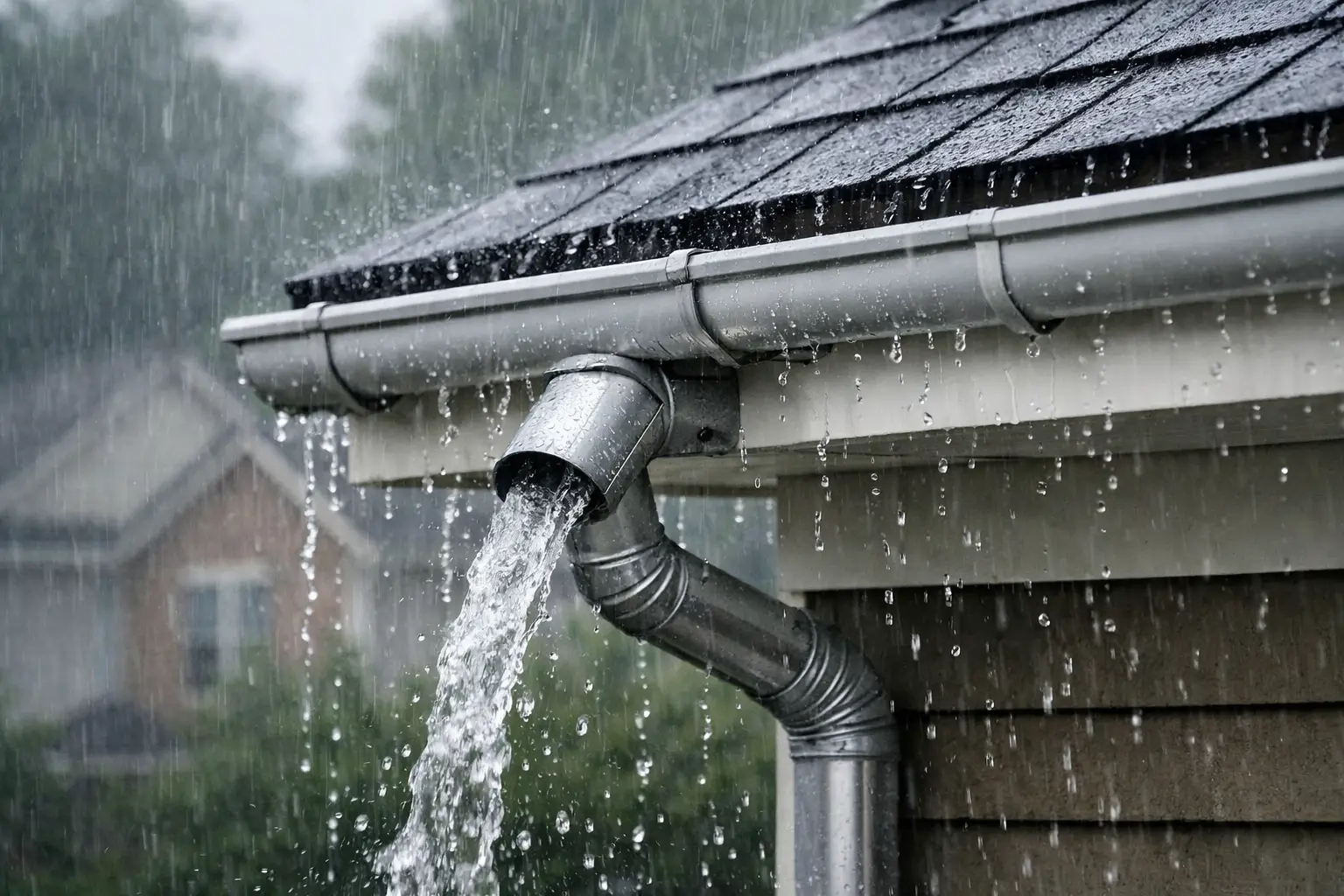
A fast Memphis downpour can expose a weak drainage system in minutes. The best gutter systems for heavy rain do more than catch roof runoff: they move water safely away from your foundation, siding, landscaping, and entryways before it can create a costly problem.
For homeowners in Memphis, Germantown, Eads, Southaven, Olive Branch, and nearby communities, the right choice is rarely just the biggest gutter available. Roof size, pitch, valleys, tree cover, downspout placement, and grading all affect how well a system performs. A properly designed gutter system should look clean from the street while handling the kind of sudden, heavy rainfall common in the Mid-South.
What Makes a Gutter System Ready for Heavy Rain?
Gutters work as a complete drainage system. The horizontal gutter channels collect water from the roof, downspouts carry it downward, and extensions or underground drainage direct it away from the house. If one part is undersized, poorly pitched, clogged, or loose, water can overflow even when the rest of the system is in good condition.
Capacity matters most during intense rain. Standard 5-inch gutters can work well on many homes, but they may not keep up with large or steep roof planes, roofs with several valleys, or homes where water concentrates over a short section of gutter. Overflow is not simply an inconvenience. Repeated water exposure can stain siding, wash out mulch, erode soil, damage fascia boards, and add moisture around the foundation.
Installation details matter just as much as the gutter material. A system needs the correct slope toward the downspouts, securely fastened hangers, properly sealed corners, and enough downspouts to prevent bottlenecks. This is why a professional assessment is more valuable than choosing gutters by appearance alone.
Best Gutter Systems for Heavy Rain: Top Choices
6-inch seamless aluminum gutters
For many Memphis-area homes, 6-inch seamless aluminum gutters are the most practical choice for heavy rain. Their wider profile carries significantly more water than a standard 5-inch system, giving homeowners a useful margin during sudden storms. Aluminum is lightweight, rust-resistant, available in many colors, and well suited for a clean finished appearance.
Seamless gutters are formed to the measurements of your home, which means there are fewer joints along long runs. Fewer joints can mean fewer opportunities for leaks and separation over time. Corners and end caps still require careful sealing, but the overall design is more reliable than a system assembled from many pre-cut sections.
This option is especially worthwhile for homes with broad roof areas, long gutter runs, or prominent roof valleys. It is also a strong choice for homeowners replacing aging, leaking, or undersized gutters without changing the home’s exterior style.
Oversized downspouts
A larger gutter cannot perform at its best if water has nowhere to go. Oversized downspouts, often 3-by-4-inch rectangular downspouts, allow water to exit the gutter more quickly than smaller standard options. They are one of the most effective upgrades for homes that see overflow near downspout locations.
The number and position of downspouts are equally important. A long gutter run may need additional downspouts, particularly where roof valleys send a concentrated flow of water into one area. A contractor should evaluate the roof layout instead of applying the same downspout plan to every home.
K-style gutters with high-capacity design
K-style gutters are the familiar decorative profile seen on many residential homes. Their flat back allows secure attachment to the fascia, and their shape provides more water-carrying capacity than a simple half-round gutter of the same width. In a 6-inch size, they offer a balance of performance, durability, and curb appeal that fits most traditional and modern homes.
K-style gutters are not automatically the right answer for every property, but they are a dependable fit for the majority of residential rooflines. When paired with seamless fabrication, wide downspouts, and correct placement, they provide serious rain-handling ability without making the exterior look industrial.
Half-round gutters for the right home
Half-round gutters have a rounded, traditional profile that works beautifully on certain historic, upscale, or architecturally distinctive homes. They can shed debris effectively because of their smooth interior shape, but they generally carry less water than comparable K-style gutters. For that reason, they may require a larger size or more frequent downspouts when heavy rain is a concern.
They are often selected for appearance first, then engineered for performance through sizing and drainage planning. If preserving a specific architectural style is a priority, half-round gutters can still be a smart investment, as long as capacity is not treated as an afterthought.
Why Gutter Size Depends on Your Roof
The gutter system that works for a modest ranch home may fall short on a two-story home with steep slopes and multiple valleys. Roof pitch increases the speed of runoff, while valleys concentrate water from separate roof sections into a single channel. A 5-inch gutter may be adequate along a low-slope rear eave yet overflow at a front valley during the same storm.
A professional gutter evaluation should consider the square footage draining into each run, not just the total size of the house. It should also account for areas where water regularly spills over, landscaping that stays saturated, peeling paint near fascia boards, or stains on siding below the gutter line. These are often signs of a design issue, not merely a cleaning issue.
In some cases, the best answer is a targeted upgrade rather than replacing every gutter with a larger profile. Adding a downspout, widening a problem section, or installing a splash guard at a valley can improve performance where it matters most. A clear, itemized recommendation helps homeowners understand exactly what is being corrected and why.
Gutter Guards: Helpful, but Not a Cure-All
Gutter guards can reduce the amount of leaves, twigs, pine needles, and roof grit entering the system. For homes with mature trees, they can make routine maintenance easier and help keep water moving during storms. However, no guard eliminates maintenance completely, and not every guard performs equally well with every type of debris.
A poor-fitting guard can create its own problems by restricting water entry or lifting during severe weather. Guards should be selected for the roof edge, shingle condition, local tree cover, and gutter design. They are best viewed as a maintenance-reduction upgrade, not a substitute for correctly sized gutters and downspouts.
Even with guards, homeowners should occasionally check for visible buildup, confirm that downspouts are flowing freely, and watch how the system performs during a hard rain. A quick observation from the ground can reveal overflow, leaks at corners, or discharge that is landing too close to the foundation.
Do Not Overlook Drainage at Ground Level
Water that reaches the bottom of a downspout still needs a safe path away from the home. Short downspout terminations can dump thousands of gallons near the foundation over the course of a storm season. That water may contribute to damp crawl spaces, basement moisture, settling soil, or damage to flower beds and walkways.
Extensions should carry runoff away from the foundation without directing it toward a neighbor’s property, driveway, or low spot that already collects water. Depending on the lot, above-ground extensions, buried drain lines, pop-up emitters, or carefully planned splash blocks may be appropriate. The right approach depends on grading and local conditions.
This is also where roofing, siding, and gutter expertise come together. Water marks around windows, rotted trim, loose fascia, and recurring roof-edge leaks can be connected to drainage problems. Addressing the entire exterior system helps prevent a small runoff issue from becoming a larger repair.
Questions to Ask Before Installing New Gutters
Before approving a gutter project, ask how the contractor determined the recommended size and downspout locations. Ask whether the gutters will be seamless, how they will be fastened, and how the slope will be set. It is also reasonable to ask about material thickness, color options, workmanship warranty coverage, cleanup, and whether damaged fascia or soffit will be identified before installation.
Homeowners should be cautious of one-size-fits-all quotes. A lower price can be appealing, but a system that is undersized, lightly fastened, or poorly drained may require repairs long before it should. The goal is not just to install gutters. It is to create dependable water management that protects the home through the next hard storm.
Precision Roofing & Exteriors approaches gutter recommendations with the same attention to protection and craftsmanship used across the rest of the home exterior. A clear inspection and straightforward estimate give homeowners a practical path forward without guesswork or surprise costs.
The right gutter system should disappear into the background when the weather turns bad. If water is overflowing, pooling near the foundation, or leaving visible damage behind, a professional inspection can identify the cause and help you protect your home before the next heavy rain arrives.