
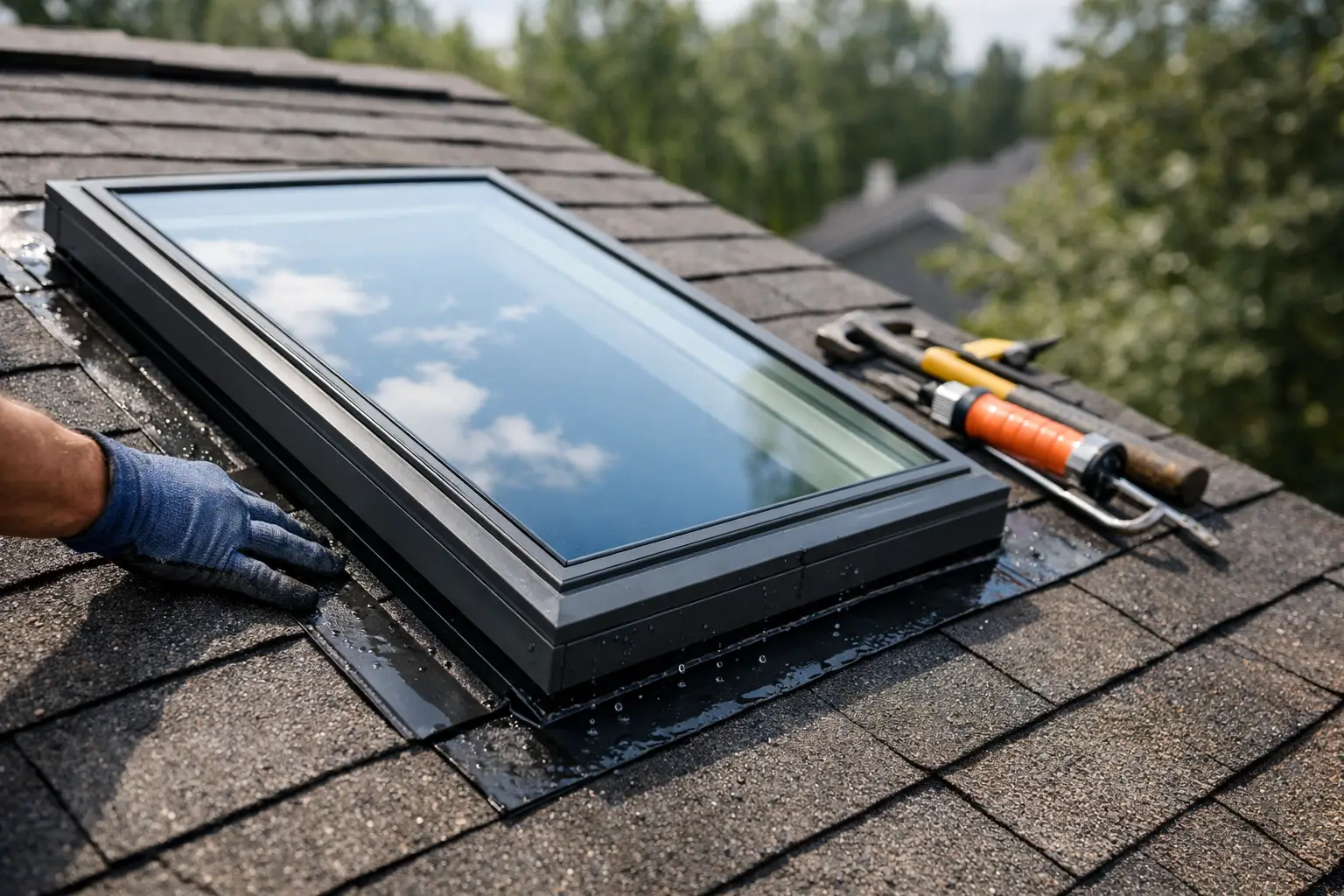
A skylight should bring more daylight into your home, not create a ceiling stain after the first hard Memphis rain. Skylight installation without leaks comes down to more than choosing a quality window. It requires a clear understanding of your roof system, correct flashing details, and workmanship that ties every component together the right way.
For homeowners, the concern is reasonable. A skylight is an opening in one of the most important protective surfaces on the house. When installed properly, it can brighten a bathroom, hallway, kitchen, or living area for decades. When installed carelessly, it can allow water into the roof deck, insulation, drywall, and framing long before a visible drip appears.
Why Skylights Leak When Installation Details Are Missed
Most skylight leaks are not caused by the glass or frame itself. They happen at the connection between the skylight and the roofing materials around it. Water naturally travels downhill, follows nail penetrations, and can be pushed sideways or upward by wind-driven rain. That is why a bead of caulk around a skylight is never a lasting waterproofing strategy.
A dependable installation uses a layered water-management system. The roof deck, underlayment, ice and water barrier where appropriate, flashing kit, shingles, and skylight curb or frame must overlap in the correct sequence. Each layer directs water back onto the roof rather than giving it a path behind the roofing system.
Older skylights are especially prone to trouble when they are simply patched during a roof repair. Cracked sealant, rusted flashing, brittle gaskets, and aged acrylic domes can all contribute to leaks. In many cases, replacing an aging skylight during a roof replacement is the more practical investment. It avoids disturbing a newer roof later and gives the entire system a fresh, coordinated installation.
Start With the Right Skylight for Your Roof
The best skylight for one home is not automatically the best choice for another. Roof slope, rafter layout, room location, sun exposure, ventilation needs, and roofing material all affect the decision.
Fixed skylights are often a strong choice for rooms that need daylight but do not require ventilation. Venting skylights can help release warm, humid air from bathrooms, kitchens, and upper-level spaces. Tubular daylighting devices may be a better fit for narrow hallways, closets, or interior rooms where a full skylight opening is not practical.
The skylight must also be compatible with the roof pitch. Manufacturers specify acceptable slope ranges for their products and flashing systems. A low-slope roof may need a curb-mounted unit and different waterproofing details than a steeper shingle roof. Installing the wrong product for the roof geometry can create drainage problems from day one.
Energy performance matters in the Mid-South as well. Look for insulated glazing, low-emissivity coatings, and products designed to manage solar heat gain. A skylight that brings in natural light should not make a room uncomfortably hot during a Tennessee summer or create excessive heat loss in winter.
The Flashing System Makes the Difference
If there is one detail homeowners should ask about, it is flashing. Factory-designed flashing kits are made to work with specific skylight models and roof types. They are not an unnecessary upgrade. They are the engineered system that channels water around the skylight opening.
A proper installation generally begins by preparing the rough opening and verifying that the framing is sound and square. The installer then integrates protective membrane materials around the opening before setting the skylight. Flashing pieces are installed in sequence with the roof covering, typically starting at the bottom, then moving up the sides, and finishing at the top.
This overlap pattern matters because water needs a continuous downhill route. Step flashing along the sides works with each course of shingles. The head flashing at the top keeps water coming down the roof from getting behind the unit. The bottom flashing directs water onto the roofing surface below.
Caulk may be used in limited manufacturer-approved areas, but it should support the flashing system rather than replace it. A skylight installation that depends on exposed sealant alone is vulnerable to UV exposure, seasonal movement, and heavy rain.
Underlayment Protects What You Cannot See
Shingles are the first line of defense, but underlayment and self-adhered waterproofing membranes provide important backup protection. Around skylights, these materials help guard the roof deck against water that gets beneath the shingles during wind-driven rain.
The key is correct integration. Membranes must lap in the proper direction and connect with the surrounding underlayment so water sheds outward. Cutting corners here may not show up immediately. The result can be slow moisture intrusion that damages decking and insulation before the homeowner notices a stain indoors.
Roof Condition Affects Leak-Free Results
A new skylight installed into a worn-out roof is rarely a long-term solution. If shingles are curling, granules are washing into gutters, flashing is deteriorating, or the roof is near the end of its service life, the skylight project should be evaluated alongside the roof itself.
This does not mean every skylight requires a full roof replacement. A roof with many years of useful life remaining can often support a properly installed replacement skylight. But the surrounding shingles need to be lifted and reinstalled without damage, and the roof deck beneath the opening must be dry and structurally sound.
The trade-off is straightforward: replacing a skylight during reroofing usually costs less than opening up a newer roof later. It also allows the contractor to install the underlayment, shingles, flashing, and skylight as one complete weatherproofing system.
Venting Skylights Need Extra Attention
Venting skylights add moving parts, which means correct product selection and installation are especially important. A quality unit should have durable weather seals, reliable hardware, and a secure closure system. For hard-to-reach locations, electric or solar-powered models can offer convenience, while manual units may be sufficient in accessible rooms.
Condensation can sometimes be mistaken for a roof leak. Warm, moist indoor air can collect on a cold skylight surface, particularly in bathrooms or poorly ventilated spaces. If moisture appears on the inside of the glass rather than around the drywall opening, improving room ventilation may be part of the answer.
A trained contractor can help distinguish between condensation, failed glazing seals, flashing problems, and active roof leaks. The fix depends on the source. Applying sealant to the exterior will not solve an indoor humidity issue, just as adding a bathroom fan will not correct failed flashing.
What a Professional Skylight Inspection Should Cover
Before installation, a careful inspection should look beyond the visible ceiling opening. The contractor should assess the roof’s age and condition, roof pitch, shingle type, skylight location, attic access, framing layout, and evidence of existing moisture damage.
Inside the home, stains, peeling paint, soft drywall, or a musty odor near the skylight shaft deserve attention. In the attic, wet insulation, darkened decking, or rusted fasteners can indicate a long-running issue. Addressing hidden damage before installing the new unit protects the repair and prevents a cosmetic fix from covering a larger problem.
Homeowners should also expect a clear explanation of what will be replaced. A detailed estimate should identify the skylight model, flashing approach, related roofing work, interior repairs if needed, and warranty coverage. This level of clarity helps prevent surprise costs and gives you a realistic picture of the work.
Warning Signs That Call for Prompt Service
A drip during rain is the most obvious sign, but it is not the only one. Watch for yellow or brown rings on the ceiling, bubbling drywall, cracked paint around the skylight, damp carpeting below it, or visible gaps in exterior flashing. A cloudy appearance between glass panes may point to a failed insulated-glass seal, while a cracked acrylic dome can allow direct water entry.
Do not wait for a small stain to become a larger repair. Water can travel along rafters or the underside of roof decking, so the place where it appears indoors may not be the exact point where it entered. Prompt inspection is the best way to limit damage and protect the surrounding roof structure.
Choose Workmanship That Protects the Whole Home
Leak-free skylight work is about respecting the entire building envelope, not just fitting a window into the roof. The installer should follow manufacturer specifications, use compatible flashing materials, protect landscaping and interior spaces, and leave the job site clean once the work is complete.
For Memphis-area homeowners, Precision Roofing & Exteriors approaches skylight projects with the same attention given to roofing, gutters, and other exterior protection work: clear recommendations, code-conscious installation, and workmanship built to stand up to changing weather.
A well-installed skylight should feel simple after the crew leaves. You see more daylight, enjoy the view above, and have confidence that the roof is still doing its most important job – protecting everything underneath it.