A Memphis thunderstorm can expose a roof problem that has been developing quietly for months. By the time a brown ceiling stain appears or a drip reaches the attic, roof decking water damage may already extend beyond one small area. The good news is that early, professional repairs can often contain the issue, protect the structure beneath your roof, and prevent a much more disruptive project later.
What Roof Decking Does for Your Home
Roof decking is the solid layer of plywood or oriented strand board, often called OSB, installed over your roof rafters or trusses. Your underlayment and shingles are attached to it. It gives the roof system its shape, creates a stable surface for fastening materials, and helps the entire assembly perform properly during wind and rain.
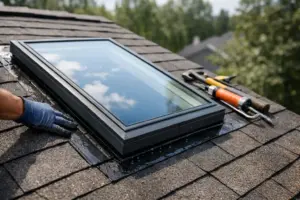
Because decking sits beneath the visible roofing materials, homeowners cannot usually see its condition from the ground. A roof can look generally sound from the street while moisture is working its way into the decking through a lifted shingle, failed flashing detail, worn pipe boot, damaged valley, or aging skylight seal.
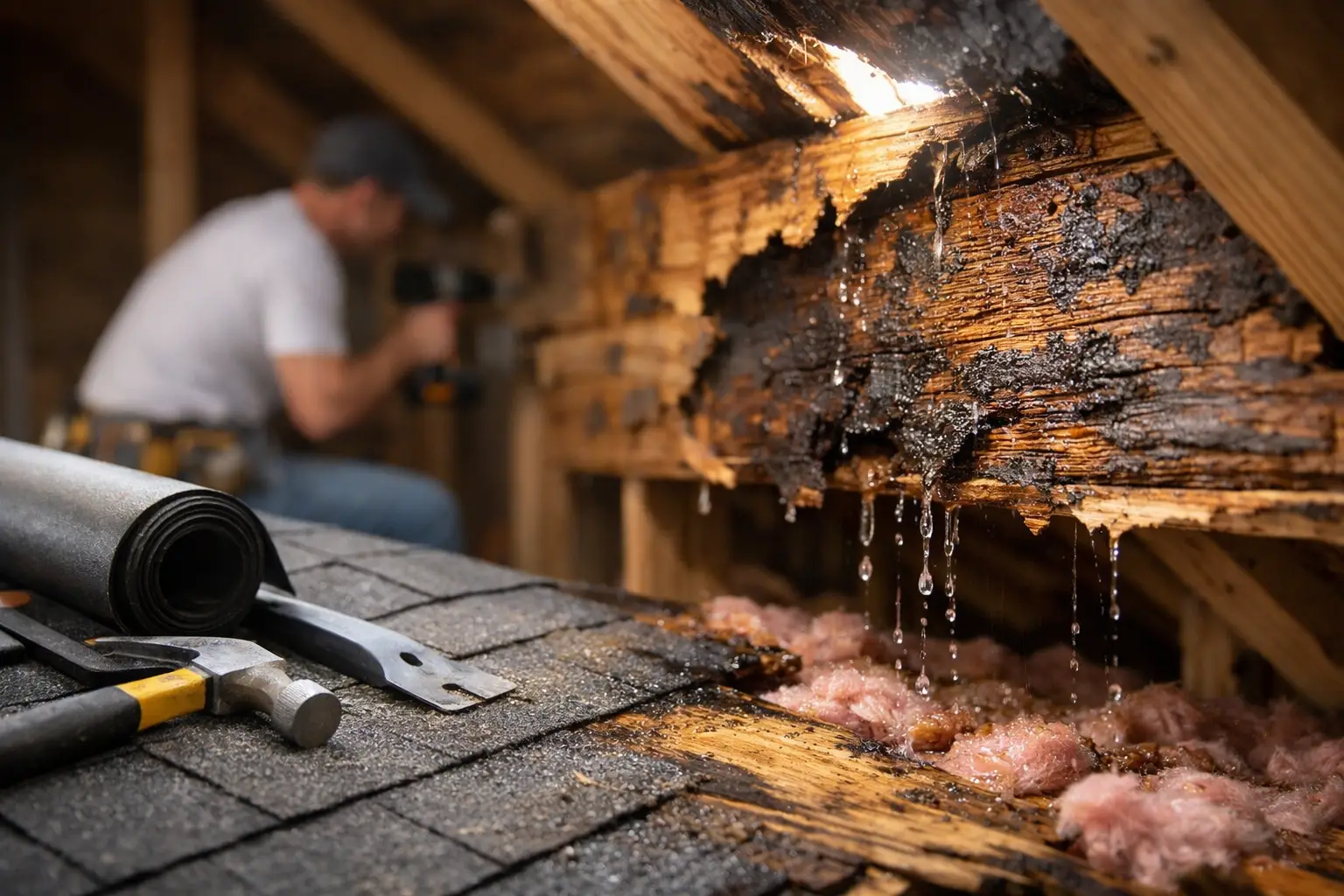
Decking is designed to stay dry. When it remains wet for extended periods, wood-based panels can soften, swell, delaminate, or rot. Fasteners may lose holding strength, and the roof surface can become uneven. That is why a leak should never be treated as a ceiling-only problem.
Signs of Roof Decking Water Damage
Some warning signs are obvious, while others require an attic or roof inspection to confirm. If you notice any of the following, it is wise to schedule an assessment before the next heavy rain:
- Water stains, bubbling paint, peeling drywall, or damp spots on ceilings and walls
- A musty odor in the attic, especially after rainfall or humid weather
- Sagging rooflines, soft areas, or dips visible from the ground
- Shingles that appear wavy, sunken, loose, or unusually uneven
- Dark wood, visible mold growth, swollen panels, or active moisture in the attic
A stain does not always sit directly below the roof opening. Water can enter near a chimney, vent, valley, or skylight, then travel along framing before it reaches the ceiling. That is one reason an experienced inspection matters. Finding the visible symptom is not the same as finding the source.
Homeowners should also pay attention after wind-driven rain. In the Memphis area, storms can push water beneath compromised shingles and flashing in ways a gentle, straight-down rain may not. If a leak appears only during certain storms, it still deserves prompt attention.
Common Causes of Decking Damage
The most common cause is a roof leak that was not repaired soon enough. Even a small opening can let in a surprising amount of water over repeated storms. Missing or cracked shingles, exposed nail heads, deteriorated sealant, and improperly installed flashing can all create entry points.
Age is another factor. As an older roof approaches the end of its service life, shingles can lose granules, become brittle, curl, or fail to shed water as effectively. The underlayment beneath them may also deteriorate. When several areas of an aging roof are vulnerable, isolated repairs may only provide a short-term solution. In that situation, a full replacement may offer better long-term value while allowing the contractor to inspect and replace damaged decking where needed.
Poor attic ventilation can make matters worse, although ventilation alone does not typically cause a roof leak. Excess heat and humidity in the attic can contribute to condensation and shorten the life of roofing materials. Bathroom fans that vent into the attic instead of outside can add significant moisture as well. A proper diagnosis separates condensation issues from rain intrusion, since the repair approach is different.
Storm damage, falling limbs, and improperly completed prior work also belong on the list. A roof is a system. Shingles, underlayment, flashing, ventilation, gutters, and drainage all need to work together to move water away from the home.
Why Prompt Repairs Matter
Waiting on roof decking water damage can turn a contained repair into a larger structural and interior restoration issue. Moisture may spread through additional decking panels, framing, insulation, and drywall. Mold can develop in damp, poorly ventilated spaces, and persistent leaks may affect electrical fixtures or personal belongings below.
There is also a wind-resistance concern. Shingles rely on properly sound decking for secure fastening. If the wood around fasteners has deteriorated, shingles may be more susceptible to lifting during high winds. For homeowners, that can mean a roof that is less prepared for the next storm season.
Prompt action does not always mean an immediate roof replacement. If the problem is limited and the rest of the roof is in good condition, targeted repairs can be the sensible choice. The right answer depends on the size of the damaged area, the cause of the leak, the age and condition of the roof, and whether matching materials are available.
How Professional Decking Repairs Are Handled
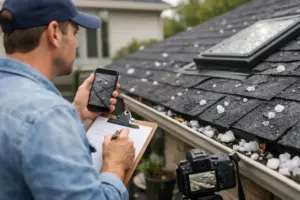
A reliable repair begins with identifying where water entered and how far the moisture traveled. A roofing professional should inspect the roof surface, penetrations, flashing, attic conditions, and accessible decking. If shingles need to be removed to see the full extent of the problem, that should be explained clearly before work begins.
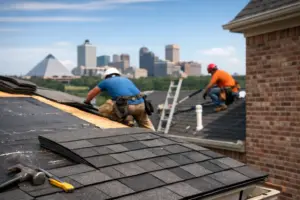
When damaged decking is found, the compromised section is removed and replaced with new material that matches the roof system requirements. The surrounding framing is checked for signs of deterioration, and the replacement decking is securely fastened. New underlayment, flashing components, and shingles are then installed to restore the weather barrier.
The quality of this work matters as much as the materials. Decking repairs must be properly supported, correctly fastened, and integrated with the underlayment and shingles so water is directed away from vulnerable areas. A patch that covers the symptom without correcting failed flashing or drainage can allow the same problem to return.
For a larger replacement project, damaged decking is often discovered only after the old roofing materials are removed. That is normal and should not be treated as a surprise cost without documentation. A trustworthy contractor will show you what was found, explain why replacement is necessary, provide itemized pricing, and discuss the repair before moving forward whenever possible.
What Homeowners Can Do While Waiting for Help
If water is actively entering the home, move furniture and valuables away from the affected area and place a container beneath the drip. If a ceiling is bulging with water, keep people out from underneath it. A water-filled ceiling can fail unexpectedly.
Avoid climbing onto a wet roof or attempting to nail down shingles during a storm. This is dangerous and can cause additional damage. If it is safe to do so, take photos of interior stains, attic moisture, and any visible exterior damage from the ground. Documentation can be useful if storm damage leads to an insurance claim.
After the immediate issue is contained, arrange a professional roof inspection. Precision Roofing & Exteriors can help homeowners understand the condition of the roofing system, document storm-related concerns, and receive a clear recommendation for repair or replacement. The goal should be a solution that protects your home, not a rushed sales decision.
Preventing Future Decking Problems
Regular inspections are one of the simplest ways to catch small roof issues before they reach the decking. Consider an inspection after severe weather, when purchasing a home, or when your roof is nearing the later years of its expected lifespan. Homeowners should also keep gutters clear and make sure downspouts carry water away from the foundation. While clogged gutters do not directly cause every roof leak, backed-up water can contribute to problems along roof edges and fascia.
Trim branches that rub against the roof or hang heavily over it. Inside the attic, watch for daylight around penetrations, damp insulation, moldy odors, or evidence of pests that may have damaged vents or openings. Do not block soffit or ridge ventilation, and make sure exhaust fans vent outdoors rather than into the attic.
A dry, well-built roof deck is mostly invisible, which is exactly how it should be. If you have noticed a stain, a sagging area, or storm-related roof damage, addressing it now gives you the best chance to protect the home and avoid a larger repair later.