A roof problem rarely shows up at a convenient time. It usually starts with a stain on the ceiling, shingles in the yard after a storm, or a home inspection that tells you the roof has reached the end of its service life. When that happens, understanding roof financing options for homeowners can make the difference between a fast, confident decision and a repair that keeps getting pushed off.
For many families in Memphis and nearby communities, the real challenge is not whether the roof needs attention. It is how to pay for it without putting the household budget under unnecessary strain. The good news is that homeowners typically have several paths to consider, and the best one depends on the condition of the roof, the urgency of the work, and how long you plan to stay in the home.
How roof financing options for homeowners usually work
Roof financing is simply a way to spread the cost of repair or replacement over time instead of paying the full amount upfront. That can come through a lender, a credit card, a home equity product, insurance proceeds, or a contractor-backed payment plan.
The right fit depends on a few practical questions. Is the roof leaking now, or are you planning ahead? Is this a modest repair or a full replacement? Do you qualify for low-interest financing, or would a shorter-term option be safer? These details matter because the cheapest monthly payment is not always the lowest total cost.
If the roof has storm damage, financing may also work alongside an insurance claim. In that case, your out-of-pocket portion may be limited to the deductible and any upgrades you choose beyond the approved scope. That can change the math significantly.
Personal loans for roof replacement or repair
A personal loan is one of the most common roof financing options for homeowners because it is straightforward. In most cases, you borrow a fixed amount, repay it in monthly installments, and keep the same interest rate for the life of the loan.
This option appeals to homeowners who want predictable payments and do not want to use the home as collateral. Approval and funding can also move relatively quickly, which matters when the roof issue cannot wait. If you are dealing with active leaks or visible storm damage, speed has value.
The trade-off is interest rate. Borrowers with strong credit may qualify for competitive terms, but rates can rise quickly if credit is fair or limited. For some homeowners, the convenience is worth it. For others, especially on larger projects, a secured option may cost less over time.
Home equity loans and HELOCs
If you have built equity in your home, a home equity loan or home equity line of credit can be an attractive way to fund a major roofing project. These products often carry lower interest rates than unsecured borrowing because the loan is tied to your property.
A home equity loan gives you a lump sum with fixed payments. A HELOC works more like a revolving line of credit, which can be useful if your project includes roofing plus gutters, siding, or related exterior work completed in phases.
Still, this is not the right answer for everyone. Approval can take longer, closing costs may apply, and the home serves as collateral. If you need emergency work right away, or if you prefer to keep financing separate from the property itself, another option may feel more comfortable.
Contractor financing programs
Many homeowners start here because it keeps the process simple. Contractor financing programs are designed to help families move forward with needed work while spreading payments into manageable monthly amounts.
This can be especially helpful when you want one clear path from inspection to estimate to installation. Instead of juggling multiple vendors and lenders, you can review financing during the estimate process and compare payment scenarios based on the actual scope of work.
Not every contractor offers the same terms, though. Some programs feature promotional periods, while others offer fixed monthly payments over a longer term. Some are excellent for homeowners who want budget stability. Others look appealing upfront but become expensive if the balance is not paid within the promotional window. Ask about the interest rate, repayment period, fees, and whether prepayment penalties apply.
A reputable contractor should be comfortable explaining these details in plain language. That level of transparency matters just as much as the monthly number.
Credit cards and promotional financing
Using a credit card for roofing costs can work in limited situations. If the repair is relatively small and you can pay the balance off quickly, a card with a promotional rate may help bridge the gap.
This tends to make more sense for minor repairs than a full roof replacement. Credit card interest can become expensive fast, and once a promotional period ends, the remaining balance may cost far more than expected. That is why this option works best for short-term needs with a realistic payoff plan.
For emergency patching or a deductible while an insurance claim is being processed, a card may serve a purpose. For a large project, it is usually worth comparing more structured financing first.
Insurance and roof financing
Homeowners insurance is not financing in the traditional sense, but it often plays a major role in how a roof project gets paid for. If wind, hail, or another covered event caused the damage, insurance may cover part or most of the cost, subject to your policy terms and deductible.
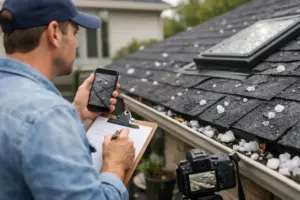
This is where documentation matters. A professional inspection can identify whether the roof damage appears tied to a storm event, general wear and tear, or a combination of issues. That distinction affects what insurance may or may not cover.
If your claim is approved, financing may still help with deductible costs or elective upgrades such as premium shingles, ventilation improvements, or gutter replacement completed at the same time. For many homeowners, combining insurance proceeds with financing creates a more practical path than trying to pay the difference in one lump sum.
What to compare before you choose
Monthly payment is only one part of the picture. A lower payment stretched over many years may cost more overall than a shorter loan with a slightly higher monthly amount. That does not automatically make one better than the other. It simply means the right choice should match your budget and your goals.
Look closely at the annual percentage rate, term length, fees, and whether the rate is fixed or variable. Also think about timing. If your roof issue is urgent, fast approval may be worth more than chasing the absolute lowest rate.
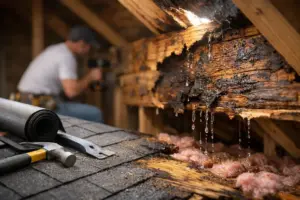
It also helps to consider the value of the project itself. A roof is not a cosmetic luxury purchase. It protects insulation, framing, ceilings, flooring, and everything underneath it. Delaying a replacement too long can lead to interior damage, mold risk, and more expensive repairs later. In that sense, the cost of waiting can be part of the financing decision too.
When financing makes sense and when it may not
Financing makes sense when it helps you protect the home promptly without draining emergency savings or forcing a rushed compromise on materials and workmanship. It can also be a smart choice when the roof replacement improves resale value, lowers the chance of future repairs, or lets you complete related exterior work more efficiently.
It may be less attractive if the interest cost is high and the roof issue is minor enough to handle with cash. If you have the funds available and using them does not create financial stress, paying directly can be the simpler route.
For many households, though, the question is not cash versus financing in a vacuum. It is whether the roof gets fixed properly now or whether a manageable payment plan helps avoid bigger damage later. That is a practical decision, not a reckless one.
A better way to approach the conversation
The most helpful financing discussion starts after a thorough inspection and a clear, itemized estimate. Once you know whether you need a repair, partial replacement, or full replacement, the numbers become real and easier to evaluate.
That is also the moment to ask the contractor how financing fits into the full process. If storm damage is involved, will they help document conditions for an insurance claim? If replacement is recommended, are warranty coverage, cleanup, and installation details clearly spelled out? The financing option should support a well-scoped project, not distract from it.
At Precision Roofing & Exteriors, we believe homeowners deserve that kind of clarity from the start. A roof is too important for vague pricing, pressure tactics, or payment plans that leave out the fine print.
If your roof is aging, leaking, or showing signs of storm damage, the next best step is not guessing. It is getting a professional inspection, understanding the scope, and choosing a payment path that protects both your home and your peace of mind.