A roof inspection after severe weather can be the difference between a straightforward repair and a leak that quietly damages insulation, ceilings, and framing. In the Memphis area, high winds, hail, heavy rain, and falling limbs can affect a roof even when it looks fine from the driveway. The right next step is not climbing onto the roof yourself. It is checking for visible warning signs from the ground, documenting what you see, and arranging a professional evaluation when conditions are safe.
Why storm damage is not always obvious
Severe weather can loosen shingles, break seals around flashing, dent metal components, or create small punctures that do not leak immediately. Water may take time to travel through roof layers and appear inside your home, often near a ceiling seam, light fixture, or exterior wall.
Wind damage is especially easy to miss. A shingle may be lifted just enough to compromise its seal, then lie back down and appear normal from below. Hail can bruise asphalt shingles, shortening their service life without creating an obvious hole. If your neighbors have visible damage or roofing crews are active in your neighborhood after the same storm, your home deserves attention too.
A professional inspection gives you a clear assessment of the roof, flashing, vents, gutters, and other exterior areas that direct water away from your home. It also creates a record of the roof’s condition while storm details are still fresh.
What to check safely before a professional arrives
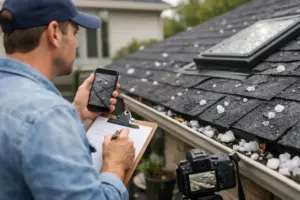
Start from the ground after the storm has passed and it is safe to walk around your property. Take photos or short videos of anything unusual. This documentation can be useful for a contractor and, if needed, your insurance carrier.
Look for these signs around the home:
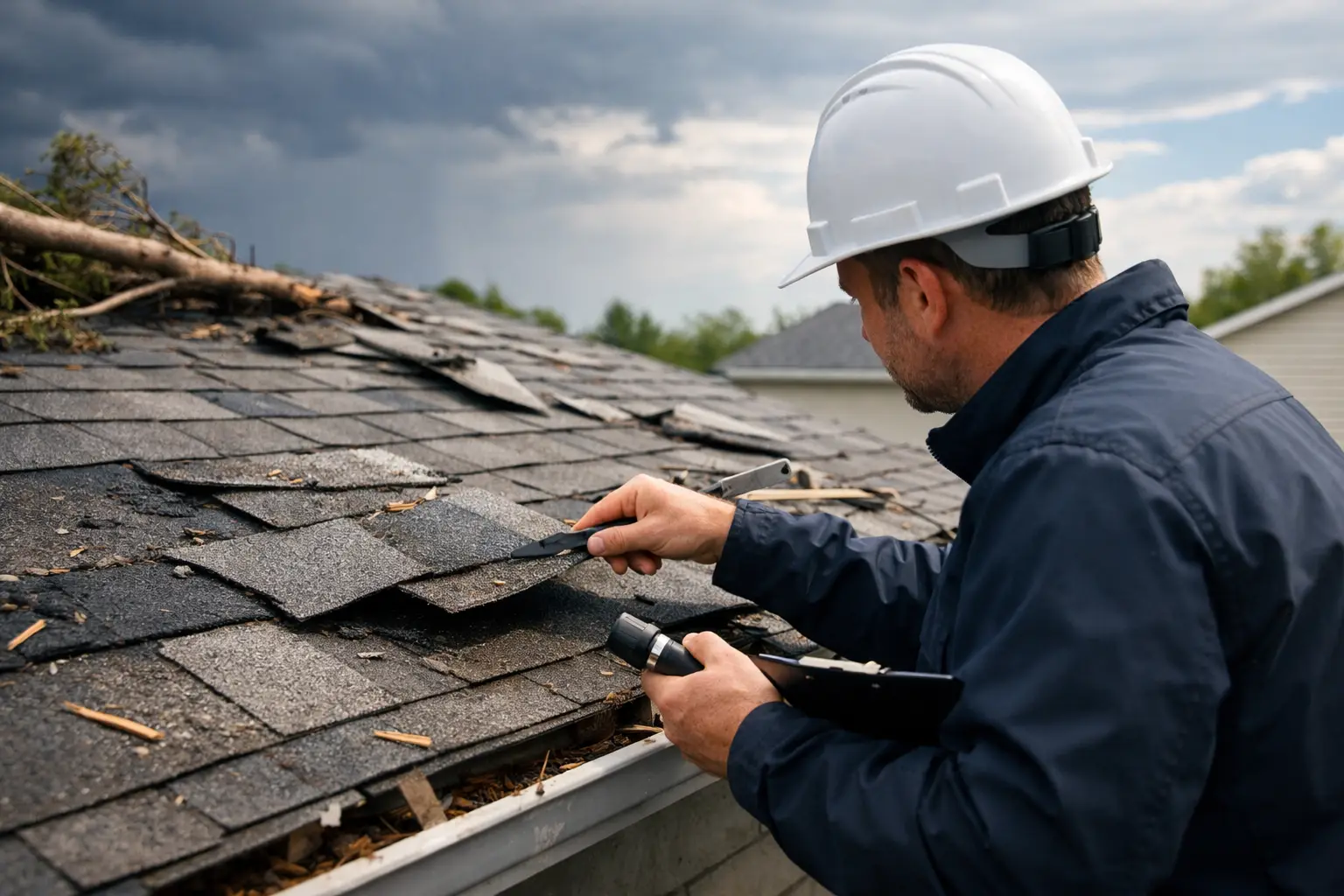
- Missing, cracked, curled, or visibly displaced shingles
- Shingle pieces, granules, nails, or metal fragments in the yard and gutters
- Dented gutters, downspouts, roof vents, flashing, or air-conditioning equipment
- Tree limbs resting on the roof, damaged soffit, or bent fascia boards
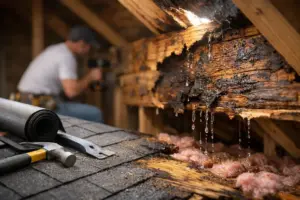
- Water stains, damp insulation, peeling paint, or a musty odor in the attic or upper rooms
Do not walk on a wet roof, use a ladder during unstable conditions, or pull limbs off the roof yourself. What looks like a small branch can be holding damaged materials in place. It is safer to keep people away from the area and call a qualified roofing professional, particularly if there is a puncture, active leak, or structural concern.
When to schedule a roof inspection after severe weather
Schedule an inspection as soon as possible after hail, strong straight-line winds, a tornado-producing system, or a storm that drops branches onto your home. You should also call promptly if you find missing shingles, interior water spots, or debris on the roof.
Not every rainstorm requires an urgent service call. A brief shower with no wind, hail, or visible damage may not warrant a full inspection on its own. However, an older roof, a prior repair area, or recurring drainage problems can lower the threshold. In those cases, a post-storm inspection is a practical way to catch a weak point before the next round of weather arrives.
Timing matters for another reason: storm-related damage can become harder to separate from normal wear as weeks and months pass. Early documentation helps establish what happened, where it happened, and what repairs may be needed to restore the roof’s protective function.
What a thorough roof inspection should include
A useful inspection is more than a quick look at the shingles. The roofing system works as connected layers, and a problem at one component can send water somewhere else entirely.
Your contractor should examine the field shingles, ridge caps, valleys, pipe boots, wall flashing, chimney flashing, skylight areas, vents, and roof penetrations. They should also evaluate gutters and downspouts, since backed-up or damaged drainage can force water toward fascia boards and roof edges.
Inside, an attic check can reveal moisture staining, wet decking, inadequate ventilation, or daylight through a penetration. On the exterior, the inspector should distinguish between storm damage, age-related wear, installation issues, and cosmetic marks that do not affect performance. That distinction matters. Homeowners deserve an honest recommendation, whether the right answer is a targeted repair, monitoring a small issue, or planning a replacement.
Ask for the findings in clear language, along with photos when available. A reliable contractor should explain the scope of work, materials, warranty coverage, and any urgent steps without pressuring you into work that does not fit the actual condition of your roof.
Protect your insurance options without rushing the decision
If a storm appears to have caused damage, contact your insurance carrier to understand your policy and claim process. Save photos, dates, weather information, receipts for emergency protection, and any inspection documentation. Avoid discarding damaged materials until your insurer or contractor advises you otherwise.
A roofing contractor can help document conditions and explain repair or replacement options, but they should not promise a claim outcome. Coverage depends on your policy, deductible, roof age, prior condition, and the adjuster’s findings. A careful contractor will help you understand the scope of observed damage while keeping the process clear and professional.
Be cautious with anyone who appears immediately after a storm and demands a signature, large upfront payment, or an insurance check before providing an itemized estimate. Local experience, clear communication, manufacturer-certified installation, and written workmanship protection are better indicators of a contractor you can trust than a high-pressure sales pitch.
Do not overlook gutters, siding, and windows
Storm damage rarely stays within one part of the exterior. Hail can dent gutters and downspouts. Wind-driven debris can damage siding, trim, screens, and window frames. A gutter that pulls away from the fascia or a downspout that no longer drains properly can create water problems long after the clouds clear.
This is why a whole-exterior perspective is helpful. If roofing repairs are needed, it is also a good time to check whether water is moving away from the foundation, whether siding seams remain secure, and whether windows and skylights show signs of moisture intrusion. Addressing connected issues together can reduce repeat visits and protect the home’s full building envelope.
What to do if water is entering the home
An active leak deserves prompt attention. Move furniture, electronics, and valuables away from the affected area. Place a container under dripping water and use towels to limit spread. If the ceiling is bulging, stay clear of it. A water-filled ceiling can fail unexpectedly.
If it is safe to do so, take photos of the interior damage and the exterior conditions you can see from the ground. Then arrange emergency roofing assistance. Temporary protection may prevent additional water intrusion, but it should be followed by a complete inspection and permanent repair once conditions allow.
For homeowners across Memphis, Germantown, Eads, Oakland, Somerville, Atoka, Southaven, and Olive Branch, fast response should still come with careful workmanship. The goal is not simply to cover a damaged spot. It is to restore dependable protection and give you confidence before the next storm line moves through.
A practical habit for long-term roof protection
The best time to learn the condition of your roof is before a small issue becomes an interior repair. Keep storm photos with your home records, watch for changes after major weather events, and schedule a professional inspection when the roof has taken a hit or you have any reason to question its condition.
Precision Roofing & Exteriors helps local homeowners move from uncertainty to a clear plan with detailed inspections, straightforward estimates, and respectful service. After severe weather, a timely inspection is one of the simplest ways to protect the home you work hard to maintain.