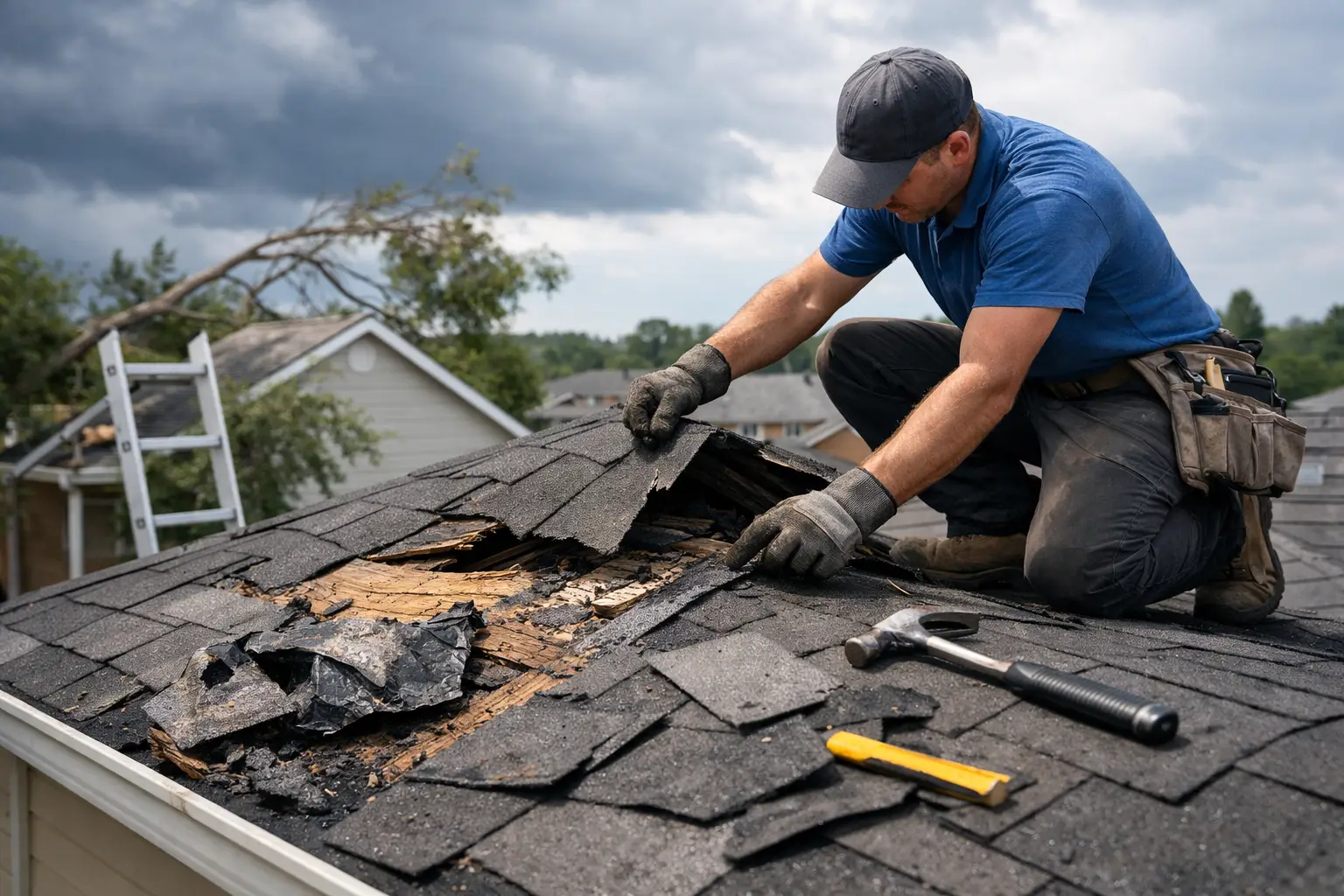
The morning after a Memphis storm can tell you a lot about your roof. Shingles in the yard, water spots on the ceiling, dented gutters, or pieces of flashing near the driveway usually mean the damage is more than cosmetic. If you need roof repair after storm damage, the first few decisions matter. Move too slowly and a small issue can turn into interior damage, mold, or decking rot. Move too quickly with the wrong contractor and you may end up paying for rushed work that does not hold up.
For most homeowners, the right approach is simple: protect the home, document what you see, and get a professional inspection before making assumptions about the scope of repair. Storm damage is not always obvious from the ground, and the visible problem is not always the only one.
What storm damage really does to a roof
Wind, hail, heavy rain, and fallen limbs all affect a roofing system differently. Wind can break the seal on shingles, lift edges, and expose nail lines. A roof may still look mostly intact from the street while individual shingles have been creased or loosened enough to fail in the next storm.
Hail tends to be even trickier. It can bruise asphalt shingles, knock granules loose, dent vents and gutters, and shorten the life of the roof without creating an immediate leak. In some cases, homeowners do not notice the real impact until months later when weak spots begin to show up as water intrusion or accelerated aging.
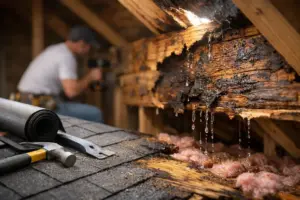
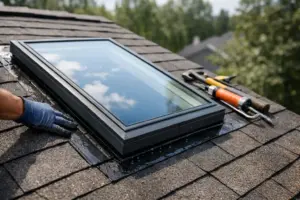
Rain is often the final piece that reveals the problem. Once flashing has shifted, shingles have lifted, or a branch has punctured the surface, water can move into underlayment, decking, insulation, and drywall. That is why roof repair after storm damage is rarely just about replacing a few shingles. The goal is to stop water entry, restore the roofing system correctly, and make sure the vulnerable details around valleys, vents, chimneys, skylights, and gutters are addressed too.
What to do first after a storm
Start with safety. If there are downed power lines, structural concerns, or active water entering the home near electrical fixtures, stay clear and contact the proper emergency services first. Do not climb onto the roof after a storm. Wet shingles, hidden soft spots, and storm debris create real fall risk.
Walk your property carefully and look for signs of damage from the ground. Check for missing shingles, metal pieces, fallen tree limbs, gutter dents, exposed roof decking, and shingle granules collecting near downspouts. Inside the home, look at ceilings, attic spaces, and upper walls for stains, bubbling paint, damp insulation, or musty odors.
Take clear photos and short videos of anything you find. That documentation can help with insurance and gives your contractor a useful starting point. If water is actively getting in, place buckets where needed and move valuables away from the affected area. Temporary protection matters, but permanent repair should follow quickly.
When a repair is enough and when it is not
This is where experience matters. Not every storm-damaged roof needs full replacement, and not every roof can be responsibly patched and sent on its way. It depends on the age of the roof, the extent of damage, the type of material, and whether the affected area can be repaired without compromising surrounding sections.
A targeted repair may be the right answer if the damage is limited to one area, the shingles are still available, and the rest of the roof is in good condition. Replacing torn shingles, resealing exposed areas, correcting flashing, and repairing small punctures can be a smart, cost-effective solution when caught early.
On the other hand, a repair may not be the best long-term value if the storm impact is widespread, the roof is already near the end of its service life, or matching materials are no longer available. Sometimes the visible damage is concentrated in one spot, but the inspection shows broader wind lift or hail bruising that affects the roof’s performance as a whole. In those cases, a more comprehensive approach protects the home better and can actually reduce repeat repair costs.
Why a professional inspection matters
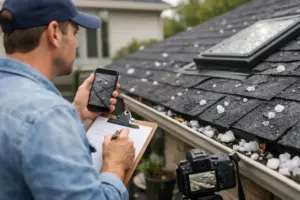
A storm inspection should go beyond a quick glance. A qualified roofing professional looks at shingles, ridge caps, valleys, flashing, roof penetrations, ventilation components, gutters, fascia, soffit, and often attic conditions as well. The purpose is not just to confirm that damage exists. It is to identify how water might travel, where weak points have formed, and what code-compliant repair will require.
That level of detail is especially important when insurance is involved. Carriers typically want documentation that separates storm-related damage from normal wear and tear. A thorough inspection with photos, notes, and a clear explanation of recommended work helps support a cleaner claim process and gives the homeowner a more accurate picture of what comes next.
For Memphis-area homes, storm patterns can create mixed damage. One side of the roof may show obvious wind loss while another shows hail impact on metal components. An inspection that misses those details can leave money on the table or leave parts of the home exposed after the repair is done.
How insurance fits into roof repair after storm damage
Insurance can be helpful, but it is not always straightforward. Policies differ, deductibles vary, and claim outcomes depend on cause, documentation, timing, and policy language. That is why homeowners benefit from having a contractor who can explain the repair scope clearly and help organize the information the adjuster will need.
The key is to avoid guessing. Filing a claim before you understand the extent of damage can create confusion. Waiting too long can also be a problem if damage worsens or documentation becomes harder to support. In many cases, the best sequence is inspection first, claim second, then a clear repair plan based on both the roof condition and the insurer’s findings.
Homeowners should also be careful with storm chasers and high-pressure sales tactics. After major weather events, out-of-town crews often appear promising fast approvals and quick fixes. Some do poor work, disappear before warranty issues show up, or leave homeowners dealing with permit and code problems later. A local contractor with a strong process, written workmanship coverage, and a reputation in the community usually provides a much safer path.
What quality repair work should include
Good repair work does more than cover the damaged spot. It should restore the roof system so it performs properly in the next storm, not just pass for the moment. That means compatible materials, correct fastening, proper sealing, attention to flashing transitions, and cleanup that leaves your property in good shape.
Communication matters too. Homeowners deserve an itemized estimate, a clear explanation of what is damaged and why, and honest guidance on whether repair or replacement makes the most sense. Premium service is not just about materials. It is about responsiveness, clean job execution, and confidence that the work was done right.
At Precision Roofing & Exteriors, that is the standard homeowners should expect from any contractor they invite onto their property: prompt inspection, straightforward recommendations, and workmanship designed to protect the home for the long run.
How to prevent a storm repair from turning into a bigger project
Speed helps, but smart speed is what counts. The longer a storm-damaged roof sits, the more likely moisture is to spread beyond the original point of entry. What starts as a roofing repair can expand into insulation replacement, drywall work, framing concerns, and indoor air quality issues.
Routine inspections also make a difference, especially for roofs that are older or have already been repaired in the past. A roof that is maintained well generally handles severe weather better than one with loose flashing, clogged gutters, or existing weak spots. Even something as simple as trimming overhanging limbs and keeping drainage moving can reduce the chances of major storm-related damage.
For homeowners, the real goal is peace of mind. You want to know whether the roof can be repaired, what that repair should include, how quickly it needs to happen, and whether your insurance may help. A reliable contractor should make that process feel clear, not complicated.
Storms are part of life in this region, but lingering roof problems do not have to be. If your home shows signs of damage, trust what you see, get it inspected promptly, and give the repair the level of care your home deserves.